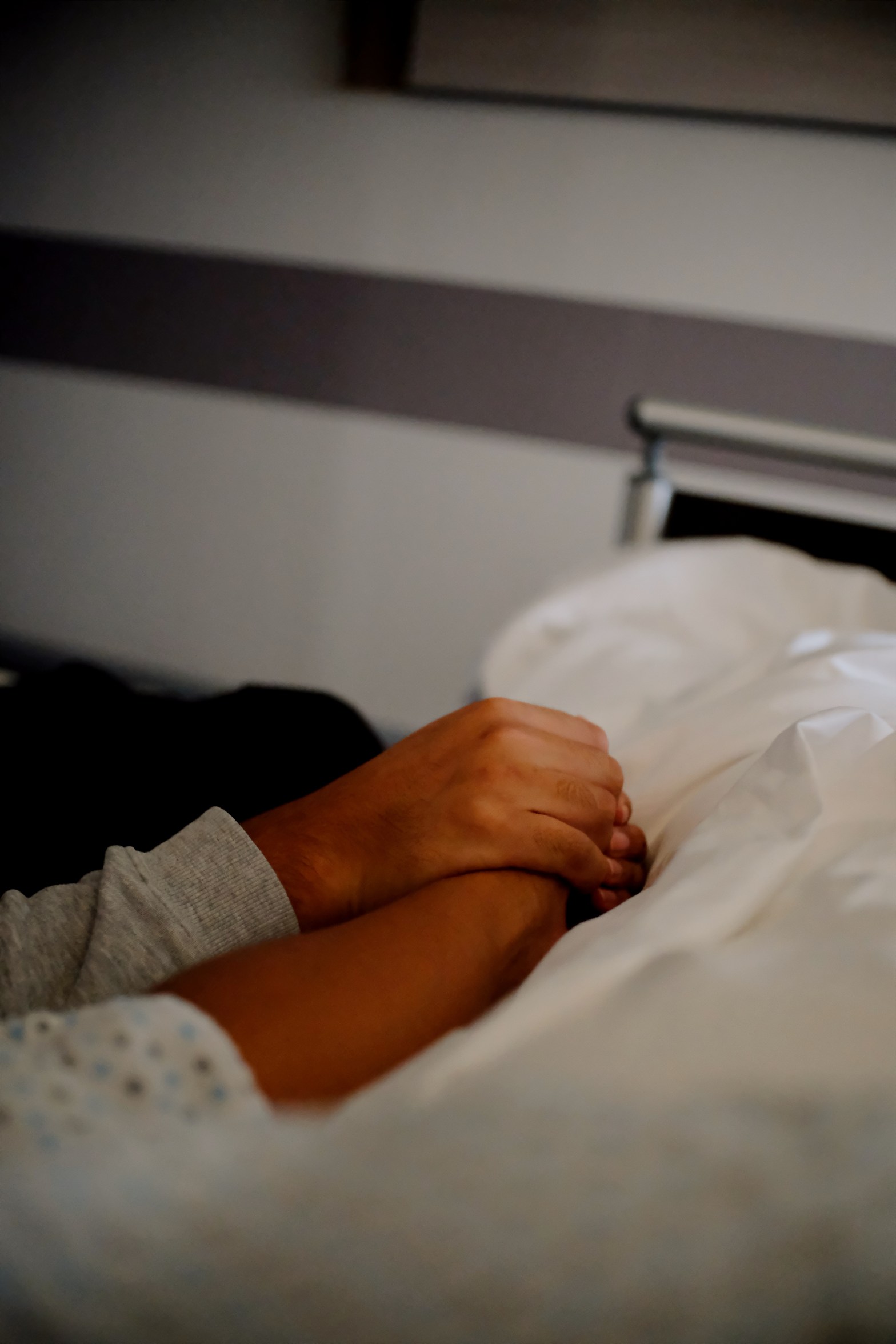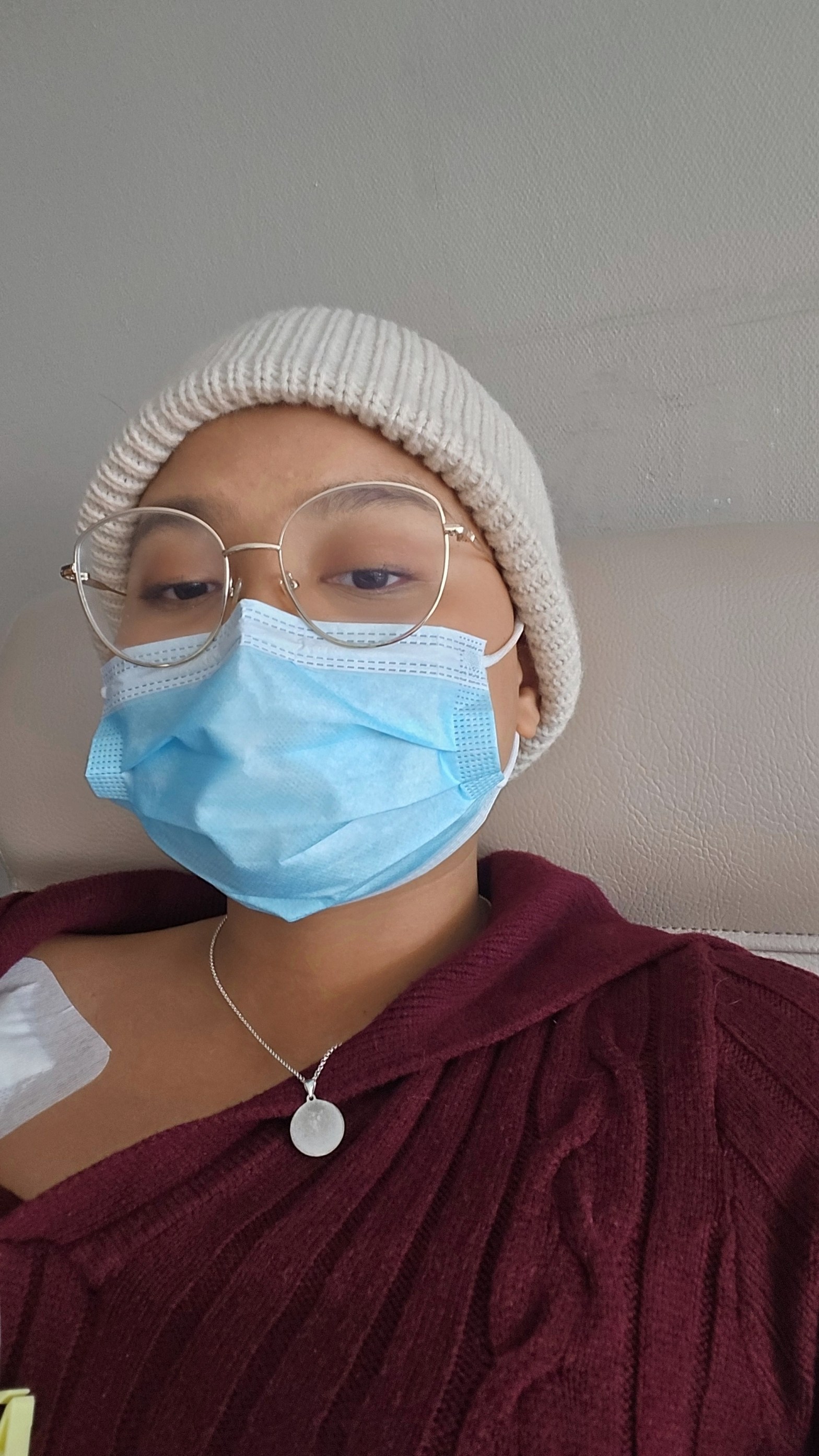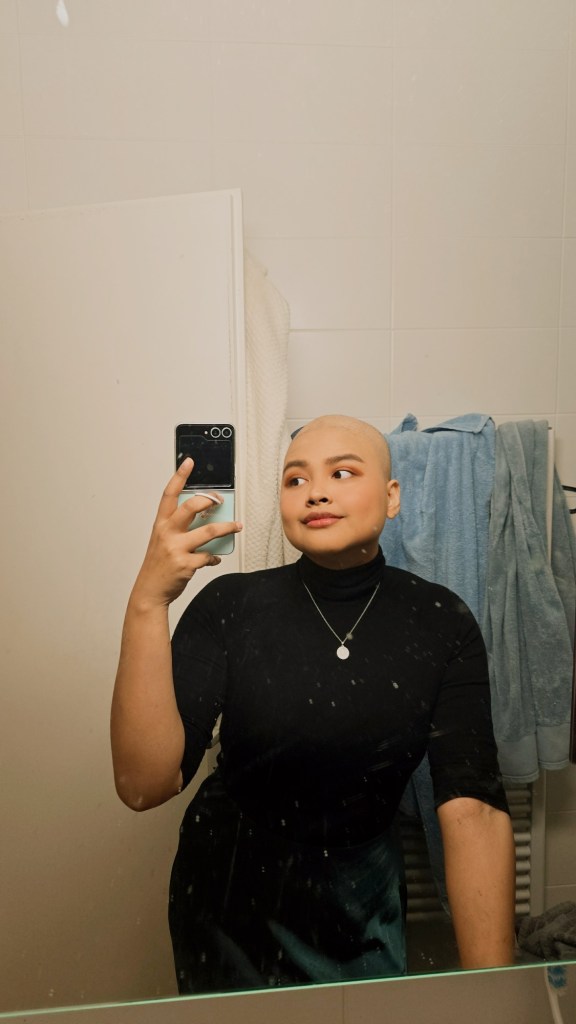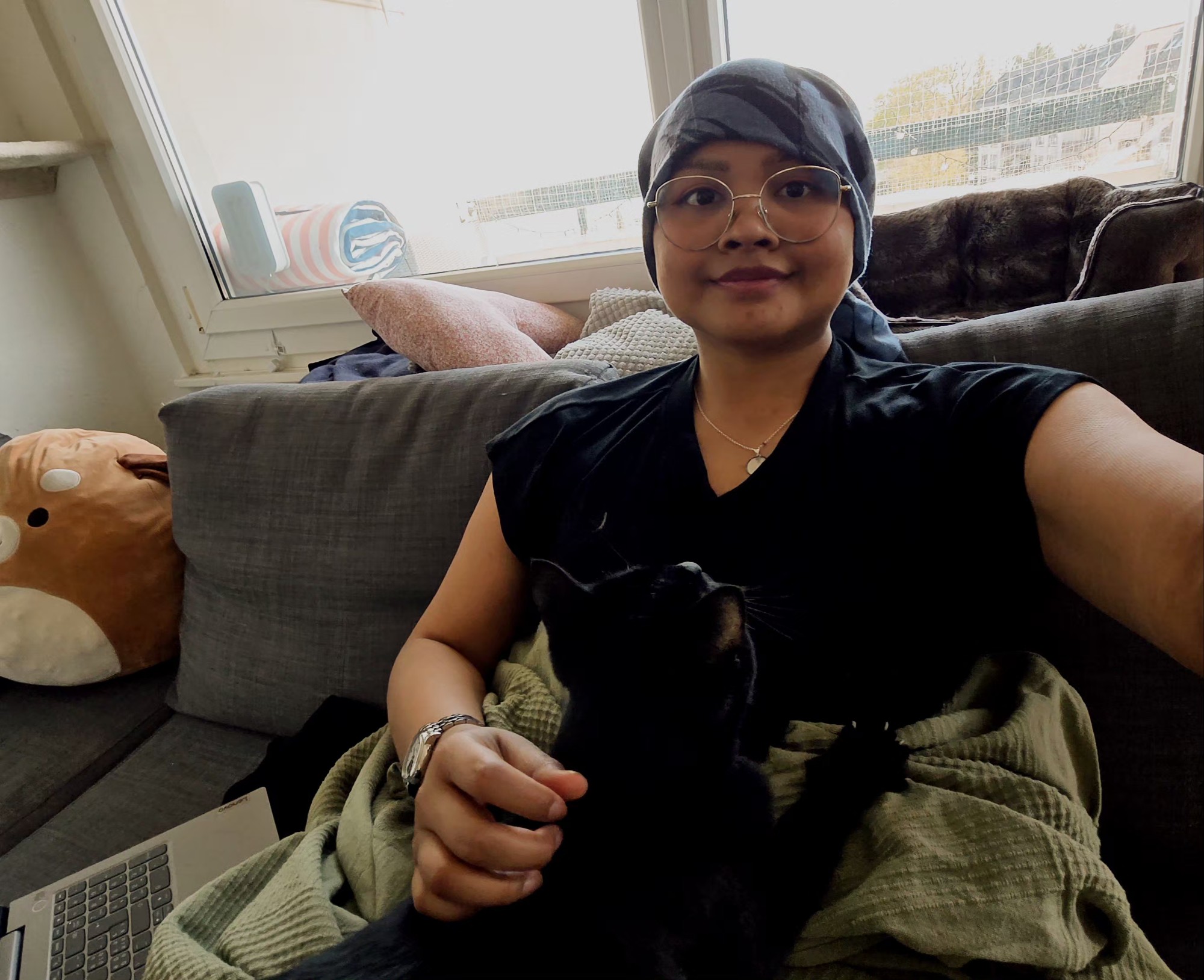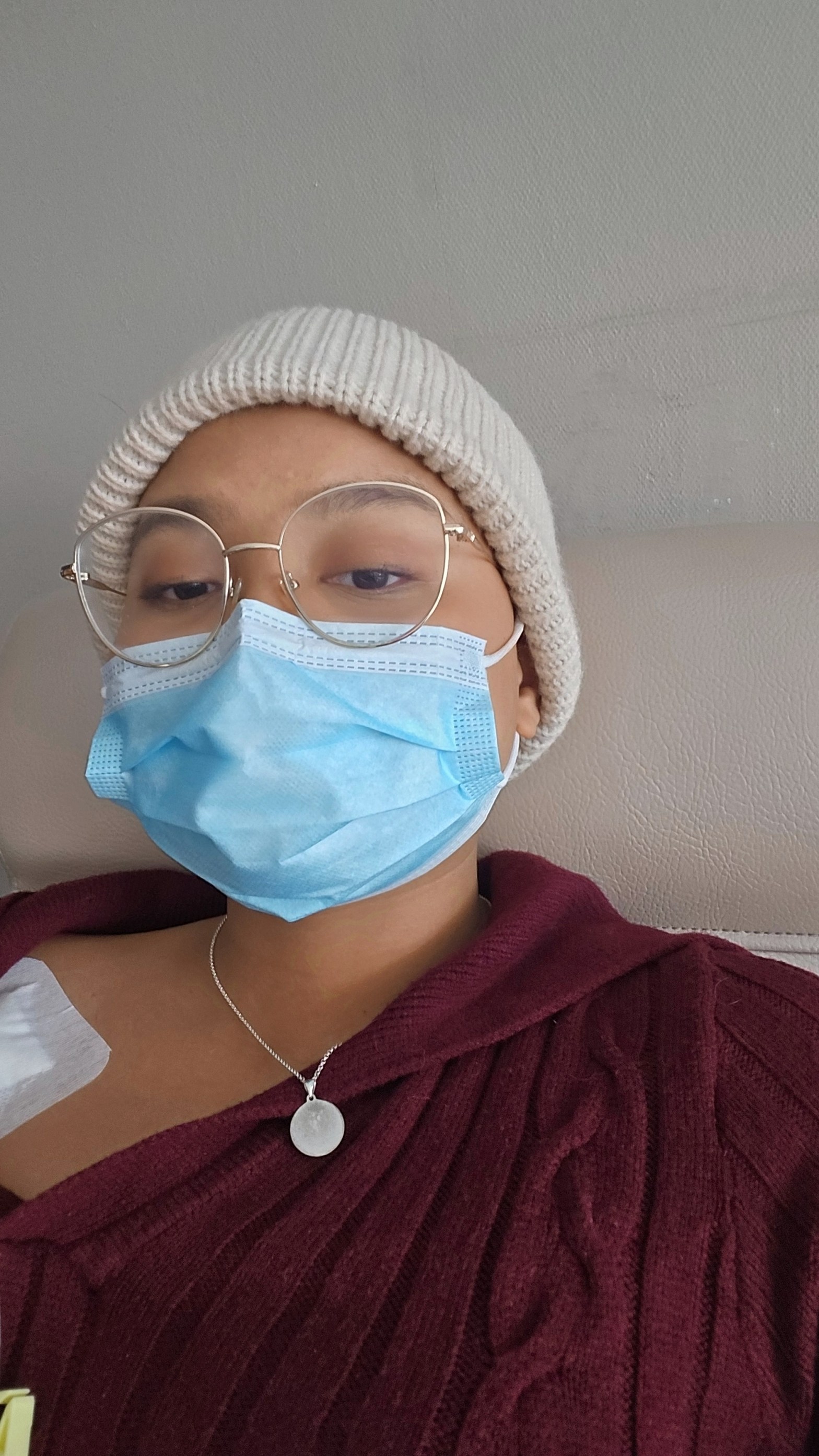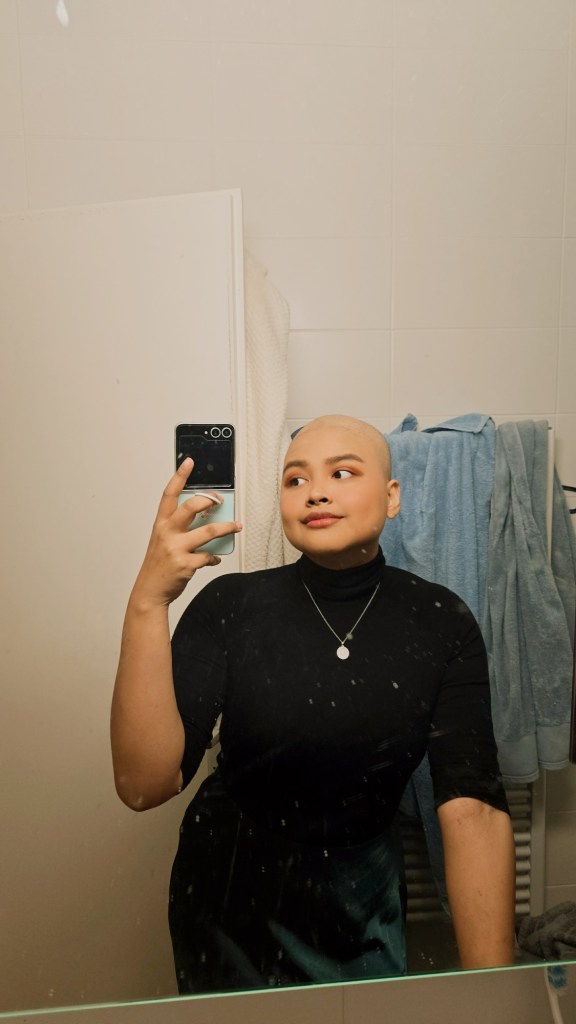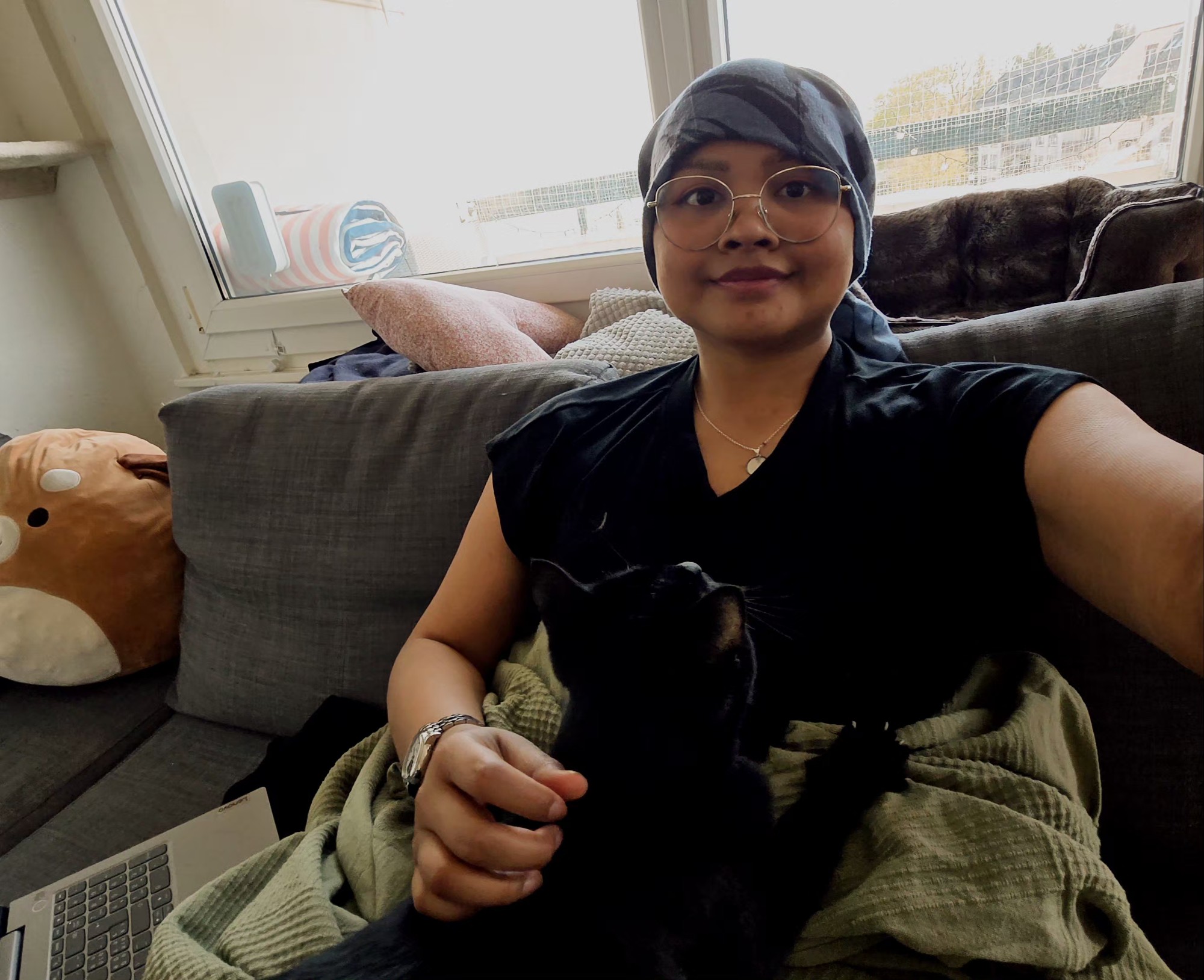
After the mastectomy, I had to learn.
Learn how to move with this new body.
Learn how to touch it.
How to look at it.
How to dress it.
How to understand what was still sensitive and what was no longer.
How to accept this chest that was mine without really looking like the one I had known for twenty-seven years.
I had to learn the scar.
The reconstruction.
The asymmetry.
The mirror.
Most of all, I had to learn to stop constantly searching for the old version of myself in my reflection.
It didn’t happen in a day.
There were moments when I looked at my body as something medical.
That was easier.
A mastectomy.
A reconstruction.
A postoperative scar.
Clean words.
Technical words.
Almost reassuring words.
Then there were the moments when I could no longer hide behind my profession.
I wasn’t a healthcare professional looking at a scar.
I was a twenty-seven-year-old woman looking at her own body.
And that was different.
But I tried.
That is probably what matters most.
I tried.
I didn’t necessarily like what I saw.
I hadn’t completely accepted it.
I didn’t wake up every morning telling myself that my scar made me a warrior.
I didn’t want to turn my chest into a symbol of courage just to make the situation more beautiful than it really was.
I simply wanted to learn how to live inside it.
So little by little, I tried to get used to it.
To this new shape.
This new skin.
This new version of me.
And behind all of that was an idea I desperately wanted to believe.
It was over.
They had removed the breast.
They had removed the cancer.
I had undergone the operation.
I had given what needed to be given.
All that was left was to recover.
To return to a normal life.
Or something that resembled one.
I didn’t think everything would become exactly as it had been before.
How could it?
My body already carried proof that something had happened.
So did I.
But perhaps, given enough time, cancer would become a story told in the past tense.
I had cancer.
Not:
I have cancer.
A tiny difference in a sentence.
An enormous difference in a life.
I wanted to reach that past tense.
I wanted the appointments to become less frequent.
I wanted my body to stop being watched like a potential threat.
I wanted every sensation to stop requiring an analysis.
I wanted doctors to become people I only saw occasionally again.
I wanted my calendar to contain things other than medical appointments.
I wanted ordinary problems back.
Ridiculous problems.
Problems that didn’t call your entire existence into question.
I wanted to be able to complain about a bad day without having to put it into perspective because I had had cancer.
I wanted to become something other than a patient again.
And for a few months, I tried.
I tried to take possession of my life again.
I tried to make peace with my body.
I tried to understand this reconstructed chest.
I tried to look at my scar a little longer.
I tried to convince myself that the operation had meant something.
That the price I had paid had been enough.
That the bargain was over.
Then October came.
Seven months.
That was about all cancer gave me before it came knocking on the same door again.
Seven months after my mastectomy.
On October 15, 2024, there was cancer again.
A recurrence.
I think there are some pieces of news that break you.
And then there are those that make you furious because you have already been broken once before.
The first time, I had cried my death.
This time,
I was angry.
An enormous anger.
Raw.
Almost animal.
Because I had already done it.
I had already done it.
I had already heard the diagnosis.
I had already waited for the results.
I had already been afraid.
I had already let doctors decide what needed to be removed from my body.
I had already given my breast.
I had already closed my eyes on an operating table without being sure I wanted to open them again.
And despite everything,
I had opened them.
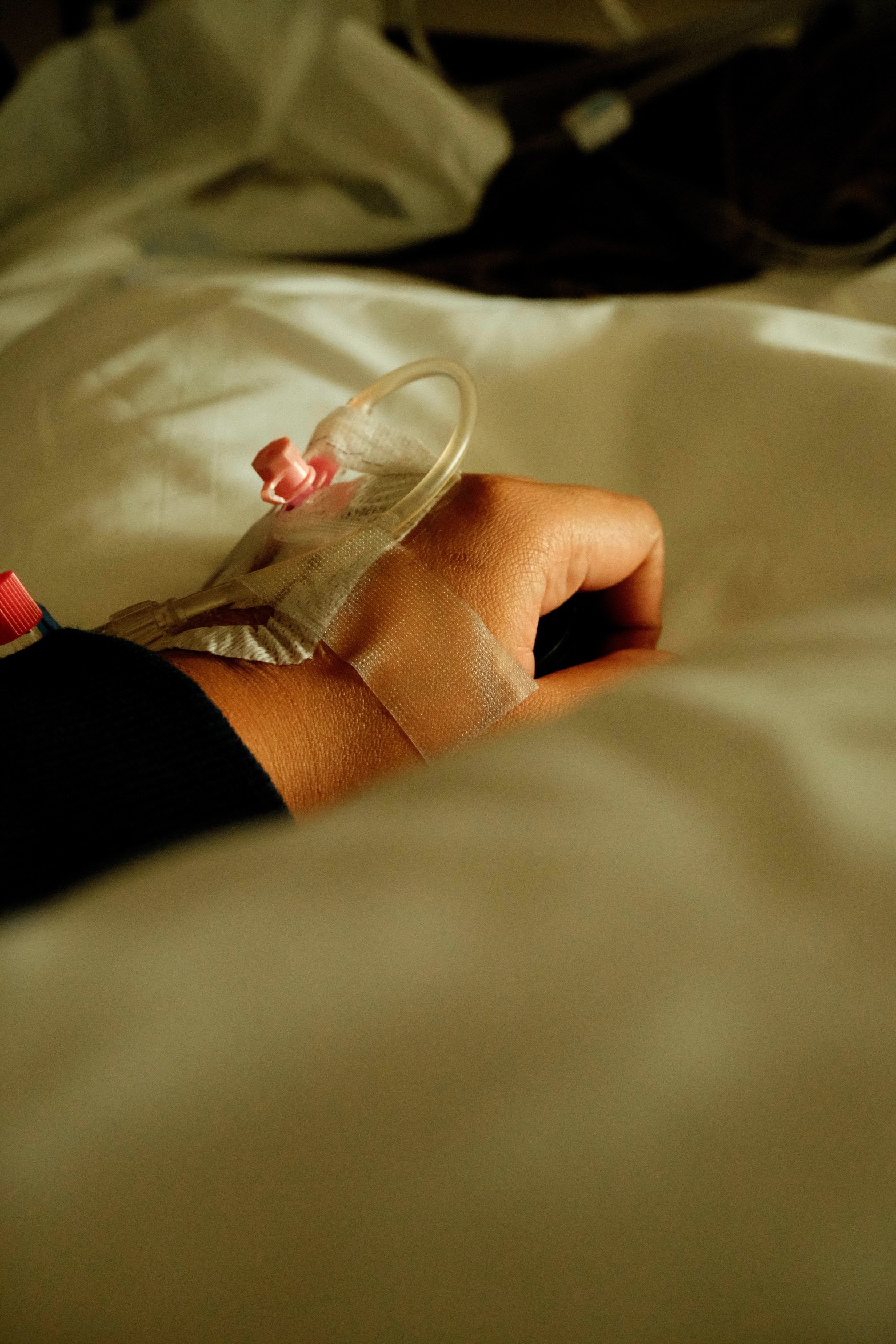
I had looked at the bandages.
I had looked at the scar.
I had looked at this new body.
I had tried to get used to it.
I had tried to make peace with something I had never asked for.
And now you were telling me there was more?
What else do you want from me?
That was the question circling through my mind.
What else am I supposed to give?
You already took my breast.
You already changed my body.
You already took part of my femininity as I had known it.
You already took my peace of mind.
My relationship with the mirror.
My sense of safety.
My trust in my own body.
What is left to take?
Because at that moment, I no longer saw cancer simply as a disease that needed to be treated.
I almost saw it as something that had come back to finish what it had started.
And part of me thought:
Then do it.
This time, do it properly.
If you came back to take something else from me,
then take everything.
Just kill me.
Don’t leave me here to survive yet another version of myself.
I know how violent that sentence is.
It was already violent inside my head.
But that was where I was.
The first time, I had secretly hoped I wouldn’t wake up after the operation.
I woke up anyway.
So I tried.
I tried to get used to this body.
I tried to continue.
I tried to make something out of this life I hadn’t even been sure I wanted.
And seven months later, the cancer was back.
How was I supposed to react?
With courage?
With gratitude?
With a smile and another speech about fighting?
I didn’t want to.
I didn’t want to be courageous anymore.
I didn’t want to be strong.
I didn’t want to hear that I had already been through so much and that this proved I could get through this too.
Because sometimes, having survived before doesn’t give you more strength.
Sometimes, it simply makes you more exhausted by the thought of having to do it again.
And I,
I didn’t want to do it again.
I wanted to scream.
I already did this.
Don’t you understand?
I already did this.
I had paid.
Maybe that was what made me angriest of all.
I had believed there was some kind of logic to it.
A silent transaction.
My breast for my life.
Fine.
Even if I wasn’t sure I wanted that life, the bargain had been made for me.
They had operated.
I had survived.
So at the very least, let it have meant something.
But the recurrence destroyed even that illusion.
My breast was still gone.
My scar was still there.
My body was still different.
And the cancer,
the cancer had come back.
So what had any of it been for?
I know now that a mastectomy is not a promise.
That an operation is not a contract signed with a disease.
That medicine cannot always guarantee that something will never return.
But I wasn’t experiencing that recurrence through statistics.
I was experiencing it through my body.
And my body had already paid.
I would have to go back into the machinery I thought I had escaped.
Doctors.
Examinations.
Results.
Decisions.
Another operation.
On November 6, 2024, I would undergo a lumpectomy.
Once again, they would open my body.
Once again, remove something.
Once again, wait.
Except this time, something had changed.
The first time, I had mostly been lost.
This time, I was furious.
At cancer.
At my body.
At the injustice of something that hadn’t even waited for me to learn how to live with the first scar before coming back to give me another.
At reassuring words.
At the word lucky.
At the idea that I absolutely had to find something positive in all of this.
I didn’t want positivity.
I wanted my breast back.
I wanted March back.
I wanted to return to January, sitting in front of my television, place my fingers over that lump, and live again in that world where I didn’t know anything yet.
I wanted that girl back—the one who criticized her body without knowing how desperately she would one day wish she could have it exactly as it was.
But that girl no longer existed.
So I had to start again.
Not because I had found a reason to live.
Not because I had decided to fight.
Not because some light had suddenly appeared at the end of something.
I continued because the appointments kept coming.
Because the doctors kept organizing things.
Because the days continued to pass whether I wanted them to or not.
Just like after the first diagnosis.
Sometimes my medical file moved faster than I did.
Except this time, I knew what could be waiting behind those doors.
And I also knew something I would rather never have learned:
you can begin to get used to a catastrophe.
You can even begin rebuilding something on top of it.
And just when you finally manage to place one foot a little more firmly on the ground,
everything can begin again.
They had removed my breast.
I had tried to accept the body they had left me with.
I had tried to believe that cancer could become a sentence in the past tense.
I had cancer.
Seven months later, it had taken back the present.
And this time, I wasn’t asking what it was going to take from me anymore.
I didn’t have much left to bargain with.
I was simply angry that it hadn’t taken me with the rest.
Archives de l’auteur : arjelynne
Chapter 6 — A Breast for a Life
After the diagnosis, everything accelerated.
The appointments followed one another.
The examinations.
The doctors.
Words I already knew professionally had suddenly decided to become personal.
Tumor.
Surgery.
Mastectomy.
Reconstruction.
Genetics.
I heard them.
I understood them technically.
But understanding a word does not mean understanding what it is going to do to your life.
I needed surgery.
And they needed to remove my right breast.
My breast.
You might think that when someone tells you a part of your body has to be sacrificed to save you, some instinct for survival immediately takes over.
Take it. Do whatever you need to do. I want to live.
That is probably how I would have imagined myself reacting before I became ill.
But that isn’t what happened.
Because there was a problem no one could really see.
I wasn’t even sure I wanted to be saved.
Something inside me had gone dark after the diagnosis.
Or maybe something had already been fragile before, and cancer had simply finished breaking it.
I couldn’t tell you exactly when my desire to live began disappearing.
I only know that after March 12, I couldn’t find it anymore.
So when people talked about a mastectomy to save my life, there was something almost absurd about the proposition.
A breast for a life.
But what is that bargain worth when the person being promised a life doesn’t even know whether she wants it?
I wasn’t afraid of dying in the way people might have expected me to be.
I was afraid of surviving differently.
Afraid of waking up and having to learn how to live inside a body I no longer recognized.
Afraid of the mirror.
Afraid of the scar.
Afraid of what they were going to take away.
Afraid of having to continue afterward.
And somewhere inside all of that was a thought I didn’t necessarily say out loud.
A dark thought.
What if I don’t wake up?
I knew enough about medicine to know that surgery carries risks.
And instead of frightening me, part of me held on to that idea.
I hoped there would be a complication.
Not because I wanted to suffer.
Not because I wanted anything to go wrong for the people who were going to take care of me.
But because, in my mind at the time, it would have solved something I no longer knew how to solve myself.
I would leave as I was.
Before seeing my body changed.
Before the mirror.
Before having to learn how to live with what was missing.
I wouldn’t have to discover who I was afterward.
There was nothing beautiful about that thought.
It wasn’t courageous.
It wasn’t peaceful.
It was simply evidence of how far down I had fallen mentally.
I could no longer imagine far enough into the future to want what the doctors were trying to preserve.
My future.
While they were preparing everything to keep me alive, part of me was silently hoping I would never have to discover what that life looked like.
And yet, I kept going.
I went to the appointments.
I underwent the examinations.
I listened to the doctors.
I signed the papers.
I agreed to the surgery.
Perhaps that is one of the hardest contradictions to explain.
You can no longer want to live and still continue doing everything necessary to stay alive.
Sometimes the body keeps moving even after the mind has stopped knowing why.
Then came another wait.
The genetic test results.
And once again, my thoughts probably weren’t what anyone would have expected.
Part of me hoped the result would be positive.
It sounds absurd.
Who hopes to discover that they carry a genetic predisposition to cancer?
I did, at that moment.
Not because I wanted more disease.
Not because I wanted there to be something in my genes that might also affect my family.
But because, in my mind, a genetic result might give me another possibility:
Remove both breasts.
If you have to take one, then take both.
That thought strangely comforted me.
Two.
Not one.
Two.
Because at least it would be symmetrical.
At least when I looked into the mirror, I wouldn’t constantly see the difference between what had been affected and what had not.
I wouldn’t have one intact breast beside the other, reminding me every day of what my body used to look like.
In my mind, there was an almost childlike logic to it.
If you have to take one, then take both.
As though symmetry could somehow make the loss easier to bear.
As though losing more could, paradoxically, make me feel less damaged.
I didn’t want to compare.
I didn’t want to look at one side and see before, then shift my eyes slightly and see after.
If I had to have scars, let them be on both sides.
If my body had to change, then let it change completely.
If I had to learn to recognize a new chest, perhaps it would be easier without half of the old one still there to remind me constantly of what had disappeared.
I think more than anything, I was searching for control.
Since March 12, everything seemed to be slipping out of my hands.
My body.
My work.
My calendar.
My appointments.
My future.
Other people were now deciding when I needed to come in, which examinations I needed, what had to be monitored, and what needed to be removed.
So perhaps symmetry became one tiny thing I still felt I could have a say in.
I couldn’t choose whether or not I had cancer.
But maybe I could still choose what my body would look like after it.
And I discovered something strange:
You can wait for a medical result almost hoping it will be bad simply because it might open a door that, in that particular moment, feels easier to walk through.
I didn’t want more disease.
I simply wanted all of this to make some kind of sense.
And I wanted to be able to look at myself afterward.
If there was an afterward.
Because deep down, my mind had created two possibilities.
If I don’t wake up, I won’t have to see the change.
And if I do wake up, then take both.
In both scenarios, I was ultimately trying to avoid the same thing:
having to look at what cancer had done to me.
Before cancer, my breasts were simply there.
I didn’t think about them very much.
They were part of my body, like my arms, my legs, or my hair.
Some days I could like them.
Other days I could criticize them.
Think they were too much of this, not enough of that.
Look into a mirror without ever imagining that one day I would have to say goodbye to one of them.
Because we don’t think about saying goodbye to parts of our own bodies.
We assume they will stay with us.
And suddenly, my right breast had changed status.
It was no longer simply a part of me.
It was where the disease was.
The place that needed to be removed.
A part of my own body had become a threat to the rest of it.
I could place my hand over it and think two completely contradictory things.
It’s mine.
And:
Take it away.
Behind all of this came another question.
One I almost felt ashamed to ask when we were talking about cancer.
Will I still be a woman?
Rationally, I knew the answer.
Of course.
A breast does not make a woman.
I would have said that without hesitation to any patient.
I would have sincerely believed it for any other woman.
But there was an enormous difference between what I knew for others and what I could believe for myself.
I thought about clothes.
Necklines.
Intimacy.
Jean-Louis’s eyes.
And most of all, my own.
Because someone can tell you a thousand times that you are still beautiful.
At the end of the day, there comes a moment when you are alone in front of the mirror.
And no one can look for you.
We also had to talk about reconstruction.
Because medically, the conversation was no longer only about what they were going to remove.
It was already about what they were going to put in its place.
Once again, the doctors seemed several steps ahead of me.
I was still trying to accept the disappearance of part of my body while they were already asking me to think about the body I would have afterward.
What a strange thing.
Making decisions about a body you haven’t lost yet.
Looking at your own breast knowing that it now has an expiration date.
From the moment the mastectomy was decided, I think I looked at it differently.
I knew that soon, that breast would no longer exist.
Not in that form.
I knew that if I woke up after the operation, the next time I saw my chest, something would have changed forever.
On April 3, 2024, less than a month after my diagnosis, I entered the hospital for a right mastectomy with immediate reconstruction.
Only a few weeks earlier, I had been at work.
Only a few weeks earlier, I had been twenty-six.
Only a few weeks earlier, that lump had still been something I had discovered while watching television and left alone because it could have been anything.
Now I was in a hospital to have a breast removed.
The hospital wasn’t a completely unfamiliar world to me.
I was a healthcare professional.
At work, I had prepared patients who needed to be transferred to the hospital for surgery.
I knew that moment from the other side.
Preparing their belongings.
Making sure everything was in order.
Organizing the transfer.
Watching them leave for the hospital, then continuing my day caring for the other patients.
But I had never accompanied them to their operations.
I didn’t know what happened once they passed through the hospital doors.
That part of the story belonged to the patients.
And this time,
I was the patient.
There was no uniform to hide behind anymore.
No file belonging to someone else.
No transfer to organize before returning to work.
It was my name on the wristband.
My body being prepared.
My breast they were going to remove.
Jean-Louis was there.
And he was afraid.
I could feel it.
Perhaps he was more afraid of losing me than I was at that moment.
Because before going into the operating room, I knew one thing.
If I woke up, the body I had closed my eyes in would no longer exist in exactly the same way.
They were going to put me to sleep with my right breast.
Then, while I saw nothing, people would open my body, remove what needed to be removed, and try to reconstruct me.
Everything was being done so that I would wake up.
And I,
I wasn’t sure I wanted to.
I don’t need to make that thought more beautiful today.
It was there.
That’s all.
I went into the operating room carrying it with me.
Then I closed my eyes.
And despite what part of me had secretly hoped,
I woke up.
There were lights.
Voices.
Pain.
Bandages.
I was still there.
My right breast, however, was no longer there as I had known it.
There was a reconstruction.
A new shape.
A scar hidden beneath the dressings.
A body I would eventually have to look at.
Medicine had accomplished what it had set out to do.
It had brought me back from the operating room.
For the doctors, that was obviously what was supposed to happen.
For Jean-Louis, it was probably an enormous relief.
For me, things were more complicated.
Because now I had to do the thing I had been afraid of.
Continue.
At first, there were the bandages.
The care.
The pain.
The caution.
Everything could still be viewed as something medical.
A surgical wound.
A reconstruction.
A scar to monitor.
I could almost observe my body through the eyes of a healthcare professional.
Assess.
Look.
Understand.
It was easier that way.
Because looking at a scar professionally allows you, for a few seconds, to forget that it is on your own body.
But sooner or later, there is no medical vocabulary left to hide behind.
There is only a woman.
And a mirror.
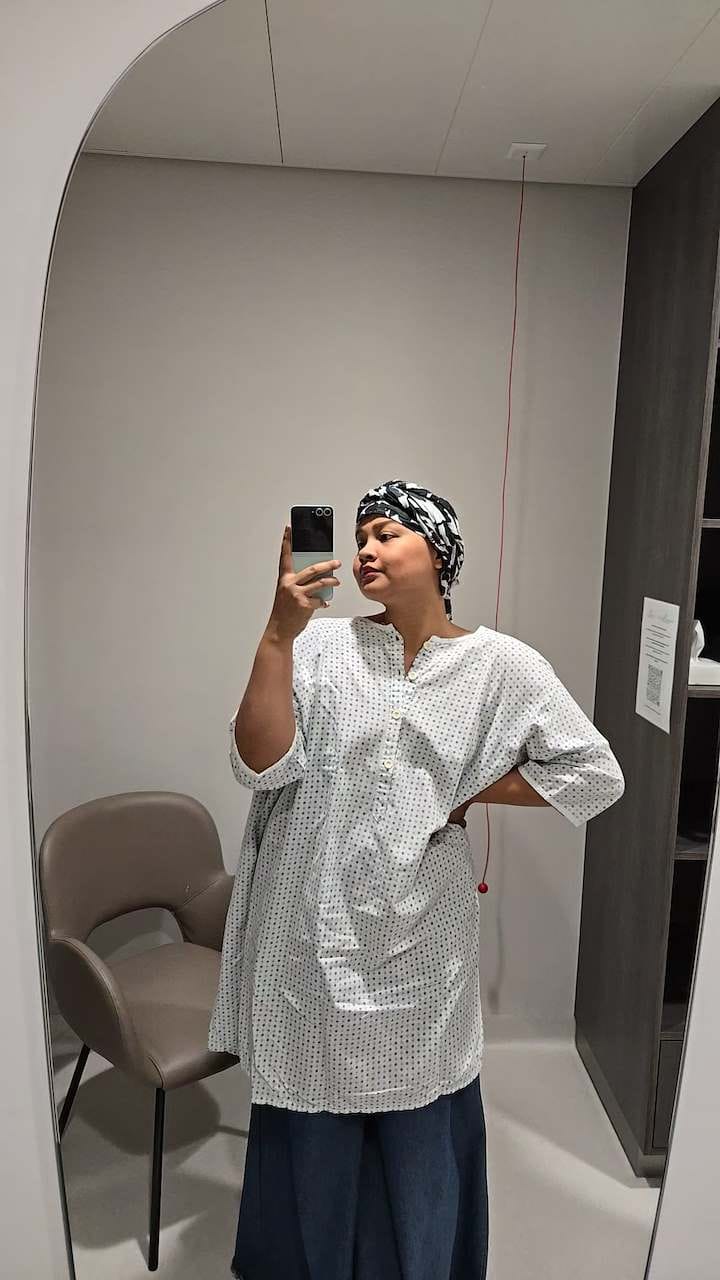
I looked at myself.
I knew what I was going to see.
And yet, I didn’t know this person.
My body had changed while I was asleep.
It now carried visible proof of something no one could have seen only weeks earlier.
Before, the cancer had been hidden inside me.
Now, even after it had been removed, it had left its signature on the outside.
A scar.
A difference.
A chest that was no longer the one I had always known.
A place my eyes had recognized for twenty-seven years and suddenly had to learn all over again.
And there was still the other breast.
The one that remained.
Intact.
Familiar.
Almost cruel in its normality.
Because it showed me exactly what the other side no longer was.
It was precisely what I had feared while waiting for the genetic results.
The comparison.
Before and after on the same body.
On one side, the person I had always known.
On the other, the person cancer had changed.
People could have told me:
But you’re alive.
And it was true.
I just didn’t know yet what to do with that chance.
I hadn’t gone through surgery with that great heroic will to survive people sometimes like to talk about afterward.
I didn’t come out of the operating room thinking life was beautiful.
I simply woke up.
And now I would have to discover what that meant.
Because surgery had succeeded in removing a diseased part of my body.
But it couldn’t remove what was happening inside my mind.
It could close my skin.
It couldn’t repair my reason for living.
So I began grieving a part of my body while still having no idea what to do with the life that had just been preserved.
Not because a breast defines a woman.
But because it was mine.
Because I hadn’t chosen to lose it.
Because you can consent to an operation and still hate what it cost you.
Because you can rationally understand why a scar exists and still be unable to bear looking at it.
Because you can be surrounded by people relieved that you are alive while feeling none of that relief yourself.
I didn’t know what kind of relationship I would build with this new body.
I didn’t know whether one day I would look at that scar with pride.
With anger.
With indifference.
Or with all of those things at once.
For now, it didn’t tell a story of victory.
I wasn’t a warrior who had just won a battle.
I didn’t need to turn what had happened to me into something beautiful.
I had lost a breast.
I had a different body.
And I was still here.
That was all.
The operation had been given a very simple name:
Mastectomy.
But that word said nothing about the mirror.
Nothing about femininity.
Nothing about the symmetry I had hoped for.
Nothing about the fear of waking up different.
Nothing about the part of me that had hoped not to wake up at all.
Nothing about everything I would now have to learn to look at.
So perhaps the real bargain had never been:
A breast for a life.
Cancer had taken my breast.
Medicine had left me with my life.
And I,
I still didn’t know whether I wanted what was left of it.
Chapter 5 — March 12
On March 12, 2024, I walked into my gynecologist’s office thinking I was going to receive a result.
I didn’t know I would walk out with a new life.
I had gone alone.
By car.
The day before, while I was at work, the office had called and asked me to come in as soon as possible.
I had asked if it could wait until the next day.
They said yes.
And somehow, that had reassured me.
If it can wait until tomorrow, it can’t be that serious.
That was the logic I had held on to.
So on March 12, I drove to Gland by myself.
I walked into the office of a woman who had known me since I was thirteen.
Dre Rotzetter-Oterro.
She had been my gynecologist for years.
I sat down.
She had the results.
And then she told me.
Cancer.
I laughed.
Not because it was funny.
Not because I didn’t understand the word.
I understood it perfectly.
Maybe that was precisely the problem.
I laughed because my mind refused to accept that this word could possibly belong in a sentence about me.
That’s not possible.
You’re joking, right?
This is a joke?
She wasn’t laughing.
She remained serious.
And slowly, the reality of her expression began to collide with the absurdity of what I thought I had just heard.
Cancer.
Me.
Twenty-seven years old.
Cancer.
The words didn’t fit together.
Then the tears came.
While I was still trying to understand what had just happened, Dre Rotzetter-Oterro was already moving forward.
There were things that needed to happen.
More examinations.
Specialists.
Appointments.
Treatment.
She was talking to me, and I could hear her voice.
I could understand the words individually.
But none of them seemed capable of staying inside my head.
My mind was stuck somewhere else.
On one sentence.
I have cancer.
Everything after that became noise.
She offered me a choice between two oncologists.
A man.
A woman.
I chose the woman.
At that moment, it was one of the few decisions I was still capable of making.
I preferred to be treated by a woman.
Her name was Dre Kohlik.
Dre Rotzetter-Oterro didn’t simply give me a name and tell me to make an appointment.
She called her.
Right there.
In front of me.
She explained my case.
My age.
My situation.
She insisted that Dre Kohlik take me on as a patient and see me as soon as possible.
I watched her on the phone.
I knew something important was happening.
I knew people were already organizing what came next.
But I couldn’t really process any of it.
Medicine had already started moving.
I hadn’t.
The doctors were already thinking about examinations, treatment, appointments, decisions.
I was still sitting there thinking:
I have cancer.
It is strange how quickly the medical world can move after a diagnosis.
One minute, you are a person waiting for test results.
The next, you have an oncologist.
A treatment pathway.
Appointments.
A file that suddenly needs to move quickly.
Everyone around you begins preparing for the next step.
While you are still mentally standing in the exact moment when someone said the word.
Cancer.
Eventually, I left the office.
I walked outside.
There was a terrace.
I sat down.
And I cried my death.
Not my treatment.
Not my hair.
Not surgery.
Not the possibility of recovery.
None of that existed in my mind yet.
Cancer meant one thing.
I am going to die.
Three days earlier, I had turned twenty-seven.
Twenty-seven.
On March 8, I had undergone the biopsy.
The next day was my birthday.
I had worked that weekend.
My colleagues had made me a cake.
I had smiled.
I had been happy.
I hadn’t spent my birthday wondering whether I was going to die.
And now, three days later, I was sitting on a terrace crying as though my life had already been taken from me.
I called Jean-Louis.
He answered in a light, cheerful voice.
He sounded happy.
Then he heard me crying.
His voice changed immediately.
I told him.
I have cancer.
What I didn’t know was that I was on speakerphone.
His colleagues heard it too.
But none of that mattered in that moment.
I didn’t have to ask him to come.
I didn’t have to explain that I couldn’t drive.
I didn’t have to tell him I needed him.
He simply said:
“I’m coming.”
He asked me to send him the address.
He told me to wait there, to stay calm, that he would get to me as quickly as he could.
Jean-Louis was at La Praille, in Lancy.
I was in Gland.
He got on his scooter and came all the way to me.
When he arrived, I was still crying.
We left the scooter in Gland.
He took the wheel of our Yaris.
I moved into the passenger seat.
That detail seems so small now.
But I remember it.
Because only a few hours earlier, I had driven myself there.
I had arrived as the person in control of the car, of the journey, of what happened next.
And now I was sitting in the passenger seat.
Somewhere along the way, Jean-Louis took the cigarettes and tobacco and threw them away.
All of it.
He was searching for an explanation.
For something responsible.
Something he could remove.
Something he could control.
Maybe the passive smoke.
Maybe this.
Maybe that.
When something terrifying happens, sometimes the mind desperately searches for a cause because a cause feels easier to bear than randomness.
If something caused it, perhaps removing that thing could somehow protect me.
I kept crying.
And Jean-Louis tried to do something incredibly ordinary.
He suggested sushi.
So we went for sushi.
Cancer had entered my life that morning.
And somehow, a few hours later, I was sitting somewhere eating sushi.
There is something almost absurd about the way ordinary life continues around catastrophe.
People eat.
Cars pass outside.
Someone laughs at another table.
A waiter asks what you would like to drink.
And inside your head, your entire existence has just collapsed.
We ate.
And then I thought about work.
Of course I did.
I had been given a long medical leave certificate.
And I wanted to take it to my workplace myself.
I wanted my bosses to hear it directly from me.
I didn’t want questions.
I didn’t want rumors.
I didn’t want people trying to guess what had happened.
So I asked Jean-Louis to drive me there.
I walked into the place where I had spent so much time taking care of other people.
This time, I wasn’t there as the caregiver.
I had a medical certificate in my hand.
I gave it to them.
And I said the words again.
“I have cancer.”
Only a few hours earlier, I had walked into a medical office alone.
I was twenty-seven.
I had a job.
A relationship.
Plans.
A Yaris parked outside.
And a lump in my breast.
Now, I had an oncologist.
A medical leave certificate.
And a word that had moved into my life without asking permission.
Cancer.
Maybe that was the real moment my existence split in two.
There was the Arjelynne who had walked into that office without knowing.
And the one who walked out, sat on a terrace, and cried her death.
Between the two, there had only been a few words.
But they had been enough.
For the first time in my life, “before” had come into existence.
And I had no idea yet what “after” was going to cost me.
Chapter 4 — The Lump
At first, it was just a lump.
I found it in January 2024.
I was watching television.
Nothing unusual. No pain. No great warning sign. No dramatic scene like the ones we sometimes imagine when, looking back, we tell the story of the moment everything began.
I was simply watching TV when my hand felt something in my right breast.
A lump.
I touched it.
Then touched it again.
That’s strange.
That was probably all I thought.
A lump in a breast could be so many things.
A cyst.
Hormones.
Something benign.
At twenty-six, my mind certainly didn’t go straight to the big C.
Cancer was something I knew as a healthcare professional.
But there is a world of difference between knowing that a disease exists and believing that it could be inside your own body.
So I let time pass.
January became February.
The lump was still there.
I checked it from time to time. I knew it existed, but my life continued normally around it.
Work.
Jean-Louis.
Ordinary days.
Plans.
Everything that had occupied my mind before the lump continued to occupy it.
Then, toward the end of February, I thought that maybe I should get it checked after all.
Why not?
Just to make sure.
I called my gynecologist.
She had known me since I was thirteen.
Throughout all those years, she had accompanied me through that very intimate part of my life as a woman, through appointments you sometimes make almost automatically.
This time, I was calling her because of a lump.
The examinations began.
And very quickly, we needed to go further.
A biopsy.
March 8, 2024.
The day before my birthday.
I think it is important to tell you what happened immediately after that biopsy.
Because nothing extraordinary happened at all.
I went back to my life.
The next day, I turned twenty-seven.
I was working during my birthday weekend.
My colleagues had made me a cake.
I was happy.
I smiled.
I celebrated my birthday with them.
For a few moments, I was simply a twenty-seven-year-old woman surrounded by colleagues who had thought of her.
The biopsy existed somewhere in the background, of course.
But I didn’t spend my weekend imagining the worst.
Why would I?
I was twenty-seven.
I had a lump.
And a birthday cake in front of me.
At that moment, the cake took up far more space in my life than cancer did.
The weekend passed.
Then Monday came.
March 11, 2024.
I was at work when my phone rang.
My gynecologist’s office.
They wanted to see me as soon as possible.
I was working.
So I asked if it could wait until the next day.
Yes.
The appointment could be scheduled for March 12.
And strangely, that answer reassured me.
In my mind, the reasoning seemed almost obvious:
If it can wait until tomorrow, it can’t be that urgent.
If it were really serious, they would have asked me to come in immediately.
Right?
So I carried on with my day.
I kept working.
Taking care of others.
Doing what I knew how to do.
The phone had rung, an appointment had been made, and yet my day continued like any other.
I didn’t know yet that it would be one of the last days when the word cancer would mostly refer to someone else’s illness.
The next day, I got into my car.
Alone.
I drove to the office of the gynecologist who had known me since I was thirteen.
I still believed there would be a reassuring explanation.
Something benign.
Something we would simply monitor.
Something that would allow me to get back into my car after the appointment and pick up my life exactly where I had left it.
After all, it had all started so ordinarily.
A couch.
The television.
A hand on my breast.
And that thought:
That’s strange.
A lump.
Just a lump.
Only the day before, I had been at work.
A few days earlier, I had blown out my candles over a cake my colleagues had made for me.
I was twenty-seven.
And because the appointment had been able to wait until the next day, part of me was still clinging to that thought:
It can’t be that serious.
I walked into the office.
My gynecologist was there.
She had the results.
And this time, there was nothing left to wait for.
March 12, 2024.
Chapter 3 — I Thought I Had Time
For a long time, I believed time was something we possessed.
Not something we could lose.
I had grown up. I had found my profession. And little by little, the big questions of adolescence had given way to the much more ordinary concerns of adult life.
Work.
Relationships.
Money.
Holidays.
Plans.
What we were going to eat that evening.
What we would do that weekend.
All those little things that seem insignificant while we are living them and that, in the end, make up almost an entire life.
There was Jean-Louis, too.
JL, as I will often call him throughout these pages.
His arrival in my life had not been welcomed enthusiastically by everyone.
My mother wasn’t happy about our relationship.
She had always played an important role in the decisions concerning my life, including those involving the people I could spend time with or allow into my world.
In a way, it was what I had always known.
There were the choices I made.
And the choices other people thought were better for me.
For a long time, I had tried to live with both.
I had followed the path toward medicine.
I had persevered through collège.
I had tried to become a nurse.
I had learned to listen, to respect, not to disappoint.
But as I grew older, something inside me began demanding more space.
The freedom to choose.
Even if I was wrong.
Even if people didn’t like my decisions.
Even if they weren’t the choices others would have made for me.
Then one day, I made a decision that would mark a real break from the life I had known until then.
I left my mother’s home.
And I went to live with Jean-Louis.
He welcomed me into his home.
At that moment, it wasn’t simply about moving in with my boyfriend.
For me, leaving also meant beginning to decide for myself what my life would look like.
It was exhilarating.
And probably frightening, too.
Because there is something strange about growing up trying to be the child everyone expected you to be: the day you finally gain the freedom to choose, you discover that you don’t always know what to do with it.
Jean-Louis was there throughout that transition.
When I doubted my professional future, he encouraged me to look for answers rather than remain stuck.
He was the one, in particular, who encouraged me to seek career advice at the Versoix town hall when I no longer knew which path to take.
That simple piece of advice would eventually lead me to my CFC as a healthcare assistant.
Then the months became years.
We built a life together.
Not a fairy tale.
A real relationship.
With routines, plans, arguments, reconciliations, shared meals, trips, difficulties, and those days so ordinary that you never think to remember them.
We grew up together.
Jean-Louis knew the young woman who was still trying to find her place.
Then the one who found her profession.
The one who was beginning to build her independence.
And I knew several versions of him, too.
Our relationship wasn’t perfect.
None are.
But it had become familiar.
Solid, I thought.
A presence so deeply woven into my life that I no longer really considered the possibility that one day, it might not be there.
I didn’t look at Jean-Louis and wonder how our story would end.
I looked ahead of us.
Because back then, whenever I imagined the future, I naturally imagined it in the plural.
Us.
What we would do.
Where we would go.
What we would build.
There were still so many things to decide.
But that didn’t matter.
We had time.
I had time.
That was probably one of the things I was most certain of.
I also had a body I didn’t think about very much.
And that feels strange to write now.
Because before our bodies become a problem, we often forget they are even there.
We complain about them, of course.
We want to lose a few pounds.
Change something.
Be prettier here.
Thinner there.
We look into a mirror and, with almost remarkable ease, find everything that could be improved.
I had my insecurities, too.
I didn’t always like my reflection.
I could criticize my body as though its only purpose was to match the image I wanted to see in the mirror.
But I trusted it.
Without even realizing that I trusted it.
I went to work assuming my legs would carry me.
I made plans assuming my body would follow.
I thought about the following year as though it were naturally promised to me.
I didn’t wake up in the morning checking whether something had changed.
I didn’t yet know what it was like to touch your own body with worry.
I didn’t know the fear of waiting for a result.
The fear of a check-up.
The fear of a doctor remaining silent for a few seconds too long.
Back then, a medical appointment was simply a medical appointment.
A hospital was mainly a place connected to my work, or somewhere other people were taken for care.
Illness still existed at a certain distance from me.
Of course I knew it existed.
I was a healthcare professional.
I had seen fragile bodies, people losing their independence, families waiting for news.
I had cared for patients during moments when their entire existence seemed suspended by a few test results, a few words, a few medical decisions.
Professionally, I knew that a life could change in an instant.
But knowing something and imagining that it could happen to you are two very different things.
The patients were the patients.
And I was on the other side.
I wore the uniform.
I walked into the room.
I asked how they were doing.
I cared for them.
Then I went home.
I went back to Jean-Louis.
I went back to our everyday life.
I went back to my own life.
An imperfect life, sometimes exhausting, sometimes complicated.
But a life I believed was solid.
I thought the big decisions would be mine to make.
Change jobs.
Travel.
Get married or not.
Have children or not.
Move somewhere else.
Start something over.
Wait a little longer.
I thought I could put certain things off until later.
Take better care of myself: later.
Take that trip: later.
Deal with certain problems: later.
Say certain things: later.
Enjoy life more: later.
We use that word so easily when we don’t yet understand its value.
Later.
As though somewhere there were an infinite supply of tomorrows that already belonged to us.
I wasn’t unhappy.
I wasn’t constantly happy, either.
I was simply living.
And perhaps that is exactly what makes that period of my life feel so remarkable when I look back at it now.
Its ordinariness.
Being able to have a problem that was just a problem.
Being able to be annoyed by a bad day at work.
Being able to argue with Jean-Louis over something ridiculous and consider it the drama of the day.
Being able to look at my body and criticize the way it looked instead of wondering what was happening inside it.
Being able to plan something six months ahead without mentally adding:
if everything goes well.
I didn’t know yet that some ordinary things were privileges.
I didn’t know that one day, a day ordinary enough for me to complain about would become something almost precious.
I thought I had time.
For Jean-Louis.
For us.
For my plans.
For my body.
To become the person I wanted to be.
To understand certain wounds.
To travel.
To change my mind.
To make mistakes.
To start over.
To live.
I thought I had time to decide what came next.
After all, I was still young.
Why would I have thought otherwise?
I didn’t know yet that a life could split in two without asking permission.
That there could be a before whose value we didn’t yet understand.
And an after we had never imagined.
Back then, there was no before.
No after.
There was Jean-Louis.
My work.
My plans.
My insecurities.
My little worries.
My ordinary days.
And that almost innocent certainty that tomorrow would simply follow today.
I thought I had time.
I didn’t know yet that sometimes, life decides before we do.
Chapter 2 — Caring for Others
I had chosen healthcare.
But choosing a direction and knowing exactly where it will lead are two very different things.
When I entered the École de culture générale—the ECG—I only spent one year there.
Before that, I had spent four years at collège.
Four years trying to stay on a path that, in the end, had led me nowhere.
At least, that was how it felt at the time.
Four years thrown away.
So when I arrived at the ECG, I found myself almost immediately facing that famous question again:
What are you going to do now?
With an ECG diploma, there were possibilities, but they weren’t endless. I had to choose between looking for vocational training, pursuing a CFC apprenticeship, continuing toward a specialized maturité, or trying to enter another school afterward.
I had chosen the healthcare track.
So naturally—or perhaps because the path was still being drawn around me—the next step seemed obvious.
I wasn’t going to become a doctor.
That door had closed.
So maybe a nurse.
This time, the profession had changed, but the pressure around me still felt very familiar.
For my mother especially, I needed to stay in healthcare.
Pastry?
There was no point in that.
Something else?
Why, when there was a serious, stable, useful path available?
Healthcare.
Nursing.
So I tried.
Again.
I applied for a specialized maturité so that I could continue on to nursing school.
And it didn’t work.
I didn’t make it.
Another failure.
By then, the word was beginning to feel familiar.
Collège hadn’t worked out.
Pastry hadn’t worked out.
And now, neither had the specialized maturité.
At that age, every door that closes can easily make you feel as though the problem must be you.
As though everyone else is moving forward while you are still trying to figure out where to go.
As though you should already know.
As though you should have found your place by now.
I was still searching.
I had to find something.
A training program.
A profession.
Another way forward.
It was during this period of my life that a man entered my story.
Of course, I didn’t know it yet, but he would remain in it for eight years.
He will appear often throughout these pages.
Not only because he was my partner for a large part of my adult life, but because he was there during many of the moments when that life was taking shape.
And at that particular moment, when I no longer knew which door to knock on, he was the one who encouraged me to ask for help.
At the Versoix town hall.
The idea was simple:
Go and see. Explain your situation. Maybe they’ll know where to guide you.
So I went.
And sometimes, the decisions that change a life begin far less dramatically than we might imagine.
No revelation.
No sudden calling.
No great inner voice telling me that I had finally found my place.
Just someone sitting behind a desk telling me about a profession.
Assistante en soins et santé communautaire.
ASSC.
A healthcare assistant.
They suggested I start with an observation placement in an EMS, a residential care home.
To see the profession.
To see what everyday life looked like.
To see whether I might like it.
So I agreed.
I walked into that EMS without really knowing what I would find there.
Elderly people.
Care.
Tasks I didn’t yet know how to perform.
Stories sometimes told more than once.
People who needed help with things most of us do without even thinking about them.
And something strange happened.
I didn’t feel completely out of place there.
Quite the opposite.
It felt… natural.
I didn’t know the profession yet. I didn’t have the skills, the professional vocabulary, or the technical knowledge.
But being around people who were more vulnerable than I was didn’t feel unfamiliar.
Paying attention.
Observing.
Helping.
Listening.
Being there.
All of it felt strangely like something I already knew.
Long before that placement.
Long before the ECG.
Long before I even knew what the letters ASSC stood for.
I had grown up with the idea that you took care of those who needed you.
First, my little brother.
Then others.
What had begun as an almost instinctive responsibility in childhood was suddenly standing in front of me in the form of a profession.
For the first time in a long time, I didn’t feel as though I was trying to force myself into a box.
I wasn’t trying to become a doctor.
I wasn’t trying to become a pastry chef anymore.
I wasn’t even trying to become a nurse.
I was simply there.
And I liked it.
Maybe all those closed doors hadn’t been time thrown away after all.
I wasn’t capable of seeing it that way yet.
At that moment, I only knew one thing:
I wanted to see where this door would lead me.
So I began my CFC apprenticeship as an assistante en soins et santé communautaire.
An ASSC.
A healthcare assistant.
Without knowing that one day, after spending years learning how to care for others, I would find myself on the other side.
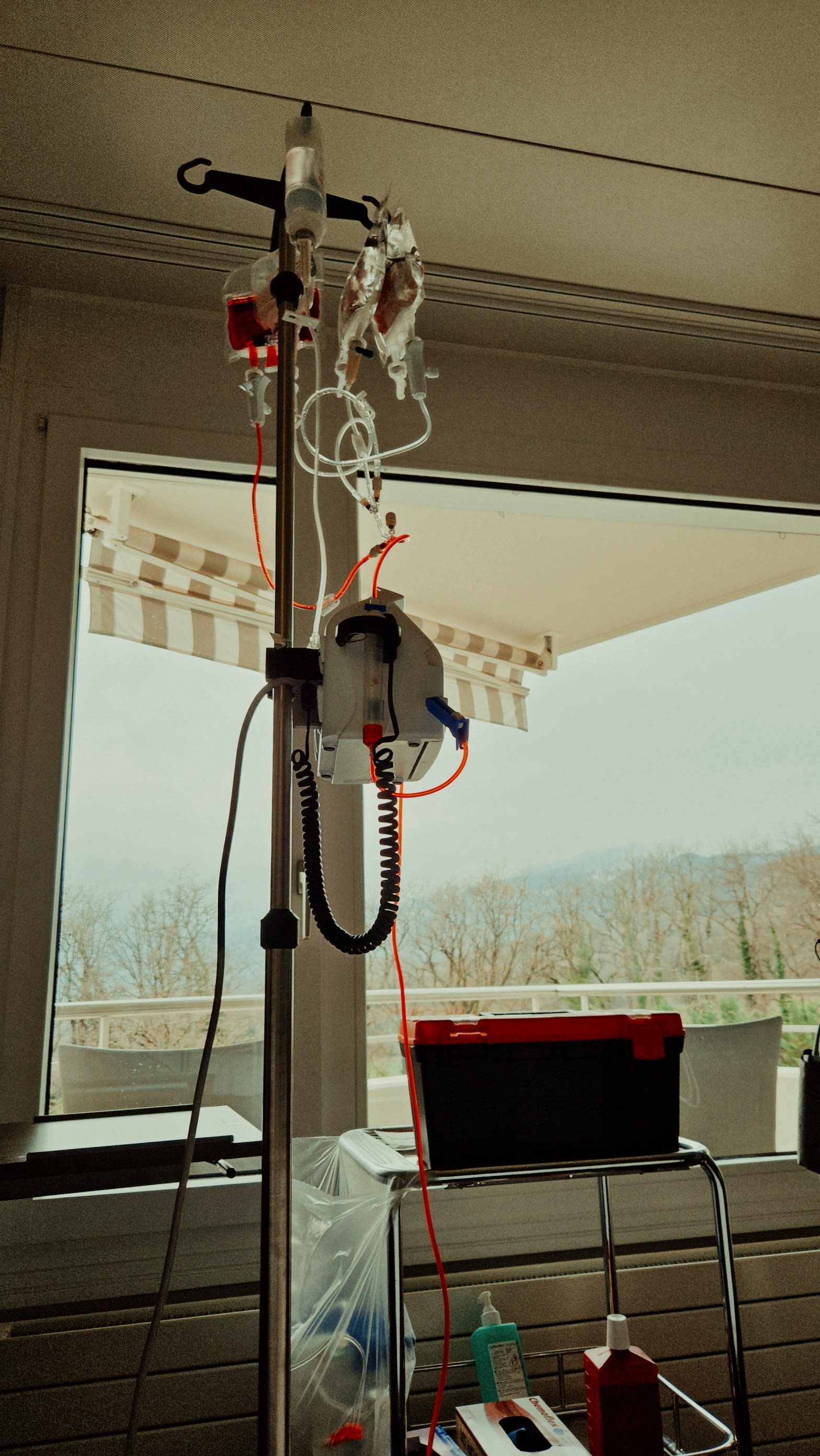
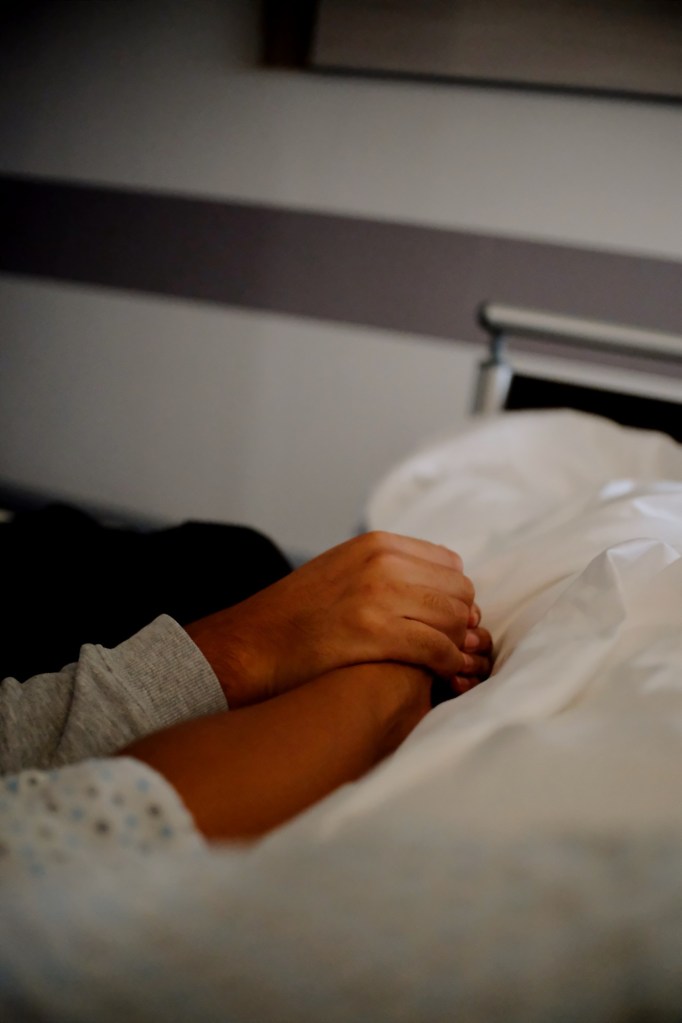
In the bed.
With a hospital bracelet around my wrist.
Hoping that someone, in turn, would know how to take care of me.
Chapter 1 — Before Everything Changed
Before the hospitals, the diagnoses, and the scars, there was a child who didn’t yet truly know that she had the right to choose her own dreams.
I was born in the Philippines, one of three children spaced almost perfectly apart.
Two years between each of us.
An older brother, two years older than me.
Me, in the middle.
And a younger brother, two years younger.
We were raised mainly by our grandparents, with a fairly traditional upbringing.
Old-fashioned.
We were expected to respect adults.
To listen.
To be grateful for what we had.
Above all, never to become ungrateful children.
And then, we were expected to succeed.
There was this idea that a child should grow into someone their family could be proud of.
Someone who studied.
Who worked.
Who made the right choices.
And for me, a future already seemed to have been chosen.
I was going to be a doctor.
At that age, I didn’t really ask myself whether that was what I wanted.
When you are a child, the dreams adults have for you can easily become your own. You repeat them whenever someone asks what you want to be when you grow up, until sometimes you forget that you never really chose them in the first place.
So I said it too.
I wanted to become a doctor.
That was the plan.
Then, at eleven years old, in October 2008, I left the Philippines with my two brothers to join our mother in Switzerland.
She was already living there with her partner, the man who would come to occupy the role of a stepfather in our everyday lives, even though it was never really made official.
For the journey, a flight attendant was assigned to accompany us from beginning to end.
For once, I wasn’t really the one holding the reins.
An adult knew where we needed to go, when we had to board, where we were supposed to sit, and what was going to happen next.
I followed.
While still keeping an eye on my brothers.
Had they been served?
Did they have a blanket?
Was everything okay?
Then we landed.
We had arrived in Switzerland.
And with this new country came many firsts.
A new school.
A new language.
A new way of life.
And, gradually, something I perhaps had never really done before:
I began asking myself what I wanted.
That was where my dream of becoming a pastry chef was born.
I wanted to make pastries.
I loved cakes, desserts, sweets—probably just as much imagining myself making them as I enjoyed eating them.
There was something about creating things with my hands that appealed to me.
Taking a few ordinary ingredients and turning them into something beautiful.
And, if I’m being fair, being surrounded by desserts all day seemed like a perfectly reasonable career argument.
For the first time, there was something different about this dream.
It didn’t come from what other people imagined for me.
It came from me.
But having a dream of your own doesn’t mean you immediately have the freedom to follow it.
The path that had been planned for me remained the same.
Primary school.
Cycle d’orientation.
Then collège.
Because collège was supposed to lead to higher education.
And higher education was supposed to lead to medicine.
So I went to collège.
And I tried to stay on that road.
I persisted.
Even when I began to understand that maybe it wasn’t mine.
Because leaving collège didn’t feel like simply changing direction.
It felt like disappointing people.
Like failing.
Perhaps even, somewhere deep inside me, like being ungrateful.
So I kept going.
Until the stress stopped existing only in my mind.
My body began to speak, too.
I developed an ulcer and had to be treated for it.
Eventually, I had to choose.
Keep trying to become the person I was expected to be,
or accept that perhaps that life was never going to be mine.
I left collège.
And I returned to the first dream that had truly belonged to me.
Pastry.
I looked for a place where I could complete a CFC apprenticeship.
I tried to find a company that would allow me to enter the world I had chosen for myself.
But it didn’t work out.
There were no places available.
And sometimes, that is part of growing up too.
Realizing that finding what you want is not enough to make life give it to you.
So once again, I had to choose.
To keep searching.
I enrolled at the École de culture générale.
And when the time came to choose a field of study, I selected healthcare.
This time, no one had told me to do it.
At least, not directly.
Maybe it really was my choice.
Or maybe the way I had been raised since childhood—taking care of those younger than me, helping people who were more vulnerable, making myself useful—had already planted something inside me.
Probably a little of both.
I wasn’t going to become a doctor.
I wasn’t going to become a pastry chef either.
I simply didn’t know yet what I was going to become.
But without realizing it at the time, I had just made a choice that would profoundly shape my life.
I had chosen healthcare.
And soon, taking care of others would no longer be something I had simply been taught to do since childhood.
It would become my profession.
Her name was Arjelynne
She didn’t know yet that one day, staying alive would become one of the bravest things she would ever do.
Back then, she was simply Arjelynne.
A tender-hearted girl with a noisy mind and an unfortunate habit of feeling everything.
Absolutely everything.
She noticed the little things: the change in someone’s voice when they said, “I’m fine,” the silences between sentences, the sadness hidden behind a smile. She remembered details other people had forgotten they had ever shared with her.
And whenever someone she loved was hurting, her first instinct was always to move closer.
To stay.
To care.
Sometimes to the point of forgetting herself.
Maybe that was her gift.
Maybe it was also where some of her wounds began.
She spent years learning how to care for others long before she learned how to care for herself.
And apparently, life had decided to teach her that lesson in its own way.
There would be love.
Hospitals.
Hands she thought would never let go of hers—and some that would.
There would be scars, both visible and invisible.
Photographs. Songs. Laughter at the most inappropriate moments. People arriving, people leaving, and nights when morning would feel impossibly far away.
Until one day, she would look into a mirror and wonder where the girl she used to be had gone.
But this story does not begin with cancer.
Nor with depression.
Nor with loss or broken hearts.
It begins before all of that.
With a young girl who had no idea how much life would one day ask of her.
A girl who still believed that scars were always things you could see.
Her name was Arjelynne.
I don’t know how her story ends yet.
I only know that throughout these pages, life will try more than once to change what that name means.
Until one day, even she will no longer be quite sure who is hiding behind it.
So for now, just remember my name.
Arjelynne.
An Atom
There are things we only discover about ourselves when life leaves us no choice but to learn them.
How much pain our bodies can endure.
How many times our hearts can break without losing their ability to love.
How empty a room can feel, even when everyone keeps telling us we are surrounded by people.
How strange it is to look into a mirror, recognize your own face, yet no longer truly recognize the person looking back at you.
And that sometimes, courage has absolutely nothing to do with fighting.
Sometimes, courage is simply choosing to stay.
But back then, long before any of this, I knew none of those things.
There was a time when hospitals had not yet become familiar places.
Before my scars carried dates and memories.
Before words like survivor became attached to my name.
There was a time when my body was simply my body.
When love still seemed like something that, once found, would stay.
When adulthood felt like a distant country I would eventually reach one day, carrying all the answers neatly packed inside a suitcase.
I had no idea.
I didn’t know that one day I would have to grieve certain versions of myself while I was still alive.
I didn’t know that people could love us deeply and still disappoint us.
That some goodbyes would come without ever giving us real closure.
That the person holding our hand through one ordeal would not necessarily be there for the next.
I didn’t know that I would eventually become intimately familiar with the art of starting over.
Starting over after illness.
Starting over after love.
Starting over after losing everything I thought I knew.
Starting over when I didn’t even want a new beginning.
Life sometimes has a cruel sense of humor.
It burns the map, then asks us which direction we plan to take.
For a long time, I thought my story would be about everything I had lost.
My health.
Pieces of my body.
Relationships.
My certainties.
My sense of safety.
People.
Versions of myself I desperately wanted back.
But loss is a strange sculptor.
It takes away, again and again, until we become convinced that eventually, there will be nothing left.
And sometimes, there really is almost nothing left.
That is when depression settles into the spaces that have been emptied.
At first, it doesn’t necessarily make any noise.
It slips into your thoughts, into nights that last too long, into mornings when simply opening your eyes already feels like an effort.
Then it takes up more space.
Slowly.
Methodically.
Until it becomes familiar.
Until the darkness is no longer merely something you are passing through, but the very place you live.
And when you live in the dark for too long, eventually you forget what the light looked like.
I forgot.
I forgot what it felt like to want tomorrow.
I forgot the girl who could laugh without having to think about it.
The girl who made plans as though the future naturally belonged to her.
The girl who didn’t need to search for a reason to stay because, once upon a time, living had simply been something she did.
In her place, there was this exhaustion.
Not the kind a good night’s sleep can fix.
Something deeper.
The exhaustion of constantly having to convince yourself to keep going.
Finding one reason.
Then another.
And another.
Until one day, searching became more exhausting than the thought of giving up.
Maybe that is what people misunderstand when they look at depression from the outside.
It isn’t always about wanting to die.
Sometimes, you simply want everything to stop.
The noise.
The pain.
The thoughts.
The obligation to wake up every morning and begin carrying a life that has become far too heavy all over again.
And there comes a point when disappearing can seem terribly easier than continuing to search for a reason to live.
I have been to that place.
The place where the darkness takes up so much space that it begins to speak for you.
The place where you can no longer tell the difference between what you truly think and what the illness is whispering to you.
The place where you begin to look at your own existence as something you could quietly step away from.
So maybe loss had won after all.
Maybe it had sculpted enough.
Torn away enough.
Erased enough.
Maybe there truly was nothing left of the person I used to be.
Or almost nothing.
Because somewhere, buried so deeply that I couldn’t even tell you where, something still existed.
Not a flame.
That would be too beautiful.
Not hope, either.
I didn’t have enough of it to call it that.
It was much smaller.
Ridiculously small.
A fragment.
An atom, perhaps.
One tiny piece of who I had been before, somewhere the darkness had not yet managed to reach.
It didn’t promise me that everything would get better.
It didn’t tell me that life was beautiful.
It didn’t know what came next in this story.
Neither did I.
It only whispered something I could barely hear.
What if we tried a little longer?
I didn’t know if I wanted to.
I didn’t even know if I was capable of it.
But for now, that atom was still there.
And this is where the story begins.
Chapitre 7 — On m’avait dit que c’était fini
Après la mastectomie, il fallait apprendre.
Apprendre à bouger avec ce nouveau corps.
Apprendre à le toucher.
À le regarder.
À l’habiller.
À comprendre ce qui était encore sensible et ce qui ne l’était plus.
À accepter cette poitrine qui était la mienne sans vraiment ressembler à celle que j’avais connue pendant vingt-sept ans.
Il fallait apprendre la cicatrice.
La reconstruction.
L’asymétrie.
Le miroir.
Il fallait surtout apprendre à ne plus chercher constamment l’ancienne version de moi dans mon reflet.
Ça ne s’est pas fait en un jour.
Il y avait des moments où je regardais mon corps comme quelque chose de médical.
C’était plus facile.
Une mastectomie.
Une reconstruction.
Une cicatrice postopératoire.
Des mots propres.
Techniques.
Presque rassurants.
Puis il y avait les moments où je ne pouvais plus me cacher derrière mon métier.
Je n’étais plus soignante devant une cicatrice.
J’étais une femme de vingt-sept ans devant son propre corps.
Et là, c’était différent.
Mais j’essayais.
C’est probablement ce qui compte le plus.
J’essayais.
Je n’aimais pas forcément ce que je voyais.
Je ne l’acceptais pas complètement.
Je ne me réveillais pas chaque matin en me disant que cette cicatrice faisait de moi une guerrière.
Je n’avais pas envie de transformer ma poitrine en symbole de courage pour rendre la situation plus belle qu’elle ne l’était.
Je voulais simplement réussir à vivre dedans.
Alors petit à petit, j’ai essayé de m’habituer.
À cette nouvelle forme.
À cette nouvelle peau.
À cette nouvelle version de moi.
Et derrière tout ça, il y avait une idée à laquelle je voulais croire.
C’était fini.
On avait enlevé le sein.
On avait enlevé le cancer.
J’avais subi l’opération.
J’avais donné ce qu’il fallait donner.
Il ne restait plus qu’à récupérer.
À reprendre une vie normale.
Ou quelque chose qui y ressemblait.
Je ne pensais pas que tout redeviendrait exactement comme avant.
Comment aurait-ce été possible ?
Mon corps portait déjà la preuve que quelque chose s’était passé.
Moi aussi.
Mais peut-être qu’avec suffisamment de temps, le cancer deviendrait une histoire au passé.
J’ai eu un cancer.
Pas :
J’ai un cancer.
Une différence minuscule dans une phrase.
Une différence immense dans une vie.
Je voulais arriver à ce passé-là.
Je voulais que les rendez-vous s’espacent.
Que mon corps cesse d’être observé comme une menace potentielle.
Que chaque sensation ne mérite plus une analyse.
Que les médecins redeviennent des personnes que je voyais occasionnellement.
Que mon agenda recommence à contenir autre chose que des rendez-vous médicaux.
Je voulais retrouver des problèmes ordinaires.
Des problèmes ridicules.
Des problèmes qui ne mettent pas votre existence en question.
Je voulais pouvoir me plaindre d’une mauvaise journée sans avoir à relativiser parce que j’avais eu un cancer.
Je voulais redevenir quelqu’un d’autre qu’une patiente.
Et pendant quelques mois, j’ai essayé.
J’ai essayé de reprendre possession de ma vie.
J’ai essayé de me réconcilier avec mon corps.
J’ai essayé de comprendre cette poitrine reconstruite.
J’ai essayé de regarder ma cicatrice un peu plus longtemps.
J’ai essayé de me convaincre que cette opération avait servi à quelque chose.
Que le prix payé avait été suffisant.
Que le marché était terminé.
Puis est arrivé octobre.
Sept mois.
C’est à peu près tout ce que le cancer m’a laissé avant de revenir frapper à la même porte.
Sept mois après ma mastectomie.
Le 15 octobre 2024, il y avait de nouveau un cancer.
Une récidive.
Je crois qu’il existe des nouvelles qui vous brisent.
Et puis il existe celles qui vous mettent en colère d’avoir déjà été brisée une première fois.
La première fois, j’avais pleuré ma mort.
Cette fois,
j’étais en colère.
Une colère immense.
Brutale.
Presque animale.
Parce que je l’avais déjà fait.
Je l’avais déjà fait.
J’avais déjà entendu le diagnostic.
J’avais déjà attendu les résultats.
J’avais déjà eu peur.
J’avais déjà laissé des médecins décider de ce qu’il fallait retirer de mon corps.
J’avais déjà donné mon sein.
J’avais déjà fermé les yeux sur une table d’opération sans être certaine de vouloir les rouvrir.
Et malgré tout,
je les avais rouverts.
J’avais regardé les pansements.
J’avais regardé la cicatrice.
J’avais regardé ce nouveau corps.
J’avais essayé de m’y habituer.
J’avais essayé de faire la paix avec quelque chose que je n’avais jamais demandé.
Et maintenant vous revenez me dire qu’il y en a encore ?
Qu’est-ce que vous voulez encore ?
C’est la question qui tournait dans ma tête.
Qu’est-ce que je dois encore donner ?
Vous avez déjà pris mon sein.
Vous avez déjà changé mon corps.
Vous avez déjà pris une partie de ma féminité telle que je la connaissais.
Vous avez déjà pris ma tranquillité.
Mon rapport au miroir.
Mon sentiment de sécurité.
Ma confiance dans mon propre corps.
Qu’est-ce qu’il reste à prendre ?
Parce qu’à ce moment-là, je ne voyais plus le cancer comme une maladie que l’on allait simplement traiter.
Je le voyais presque comme quelque chose qui revenait terminer ce qu’il avait commencé.
Et une partie de moi pensait :
Alors fais-le.
Cette fois, fais-le correctement.
Si tu es revenu pour me reprendre encore quelque chose,
alors prends tout.
Mais tue-moi.
Ne me laisse pas encore survivre à une nouvelle version de moi-même.
Je sais à quel point cette phrase est violente.
Elle l’était déjà dans ma tête.
Mais c’était là où j’en étais.
La première fois, j’avais secrètement espéré ne pas me réveiller de l’opération.
Je m’étais réveillée quand même.
Alors j’avais essayé.
J’avais essayé de m’habituer à ce corps.
J’avais essayé de continuer.
J’avais essayé de faire quelque chose de cette vie que je n’étais déjà pas certaine de vouloir.
Et sept mois plus tard, le cancer était revenu.
Comment étais-je censée réagir ?
Avec courage ?
Avec gratitude ?
Avec un sourire et un nouveau discours sur le combat ?
Je n’en avais pas envie.
Je ne voulais plus être courageuse.
Je ne voulais pas être forte.
Je ne voulais pas entendre que j’avais déjà traversé beaucoup de choses et que cela prouvait que je pouvais traverser celle-ci aussi.
Parce que parfois, avoir déjà survécu ne vous donne pas davantage de force.
Parfois, cela vous rend simplement plus fatiguée à l’idée de devoir recommencer.
Et moi,
je ne voulais pas recommencer.
Je voulais hurler.
Je l’ai déjà fait.
Vous ne comprenez pas ?
Je l’ai déjà fait.
J’avais payé.
C’est cela qui me mettait peut-être le plus en colère.
J’avais cru qu’il existait une sorte de logique.
Une transaction silencieuse.
Mon sein contre ma vie.
D’accord.
Même si je n’étais pas certaine de vouloir cette vie, le marché avait été conclu pour moi.
On avait opéré.
J’avais survécu.
Alors au moins, que cela serve à quelque chose.
Mais la récidive détruisait même cette illusion.
Mon sein était toujours parti.
Ma cicatrice était toujours là.
Mon corps était toujours différent.
Et le cancer,
lui,
était revenu.
Alors à quoi avait servi tout le reste ?
Je sais aujourd’hui qu’une mastectomie n’est pas une promesse.
Qu’une opération n’est pas un contrat signé avec la maladie.
Que la médecine ne peut pas toujours garantir que quelque chose ne reviendra jamais.
Mais je ne vivais pas cette récidive avec des statistiques.
Je la vivais avec mon corps.
Et mon corps avait déjà payé.
Il allait falloir retourner dans cette mécanique que je pensais avoir quittée.
Les médecins.
Les examens.
Les résultats.
Les décisions.
Une nouvelle opération.
Le 6 novembre 2024, je subirais une tumorectomie.
Encore une fois, on allait ouvrir mon corps.
Encore une fois, enlever.
Encore une fois, attendre.
Sauf que cette fois, quelque chose avait changé.
La première fois, j’étais surtout perdue.
Cette fois, j’étais furieuse.
Contre le cancer.
Contre mon corps.
Contre cette injustice qui n’avait même pas attendu que j’apprenne à vivre avec la première cicatrice avant de venir m’en imposer une nouvelle.
Contre les phrases rassurantes.
Contre le mot chance.
Contre l’idée qu’il fallait absolument chercher du positif dans tout ça.
Je ne voulais pas de positif.
Je voulais qu’on me rende mon sein.
Je voulais qu’on me rende le mois de mars.
Je voulais revenir au mois de janvier, devant ma télévision, poser mes doigts sur cette boule et vivre dans ce monde où je ne savais encore rien.
Je voulais récupérer cette fille qui critiquait son corps sans savoir à quel point elle aurait un jour envie de le retrouver exactement comme il était.
Mais cette fille n’existait plus.
Alors j’ai dû repartir.
Pas parce que j’avais retrouvé une raison de vivre.
Pas parce que j’avais décidé de me battre.
Pas parce qu’une lumière était soudain apparue au bout de quelque chose.
J’ai continué parce que les rendez-vous arrivaient.
Parce que les médecins organisaient.
Parce que les jours continuaient de passer, que je le veuille ou non.
Comme après le premier diagnostic.
Mon dossier avançait parfois plus vite que moi.
Seulement, cette fois, je savais ce qui pouvait se cacher derrière les portes.
Et je savais aussi quelque chose que j’aurais préféré ne jamais apprendre :
on peut commencer à s’habituer à une catastrophe.
On peut même commencer à reconstruire quelque chose dessus.
Puis, juste au moment où l’on pose enfin un pied un peu plus solidement,
tout peut recommencer.
On m’avait enlevé un sein.
J’avais essayé d’accepter le corps qu’on m’avait laissé.
J’avais essayé de croire que le cancer pouvait devenir une phrase au passé.
J’ai eu un cancer.
Sept mois plus tard, il avait repris le présent.
Et cette fois, je ne lui demandais plus ce qu’il allait me prendre.
Je n’avais plus grand-chose à négocier.
J’étais simplement en colère qu’il ne m’ait pas prise avec le reste.