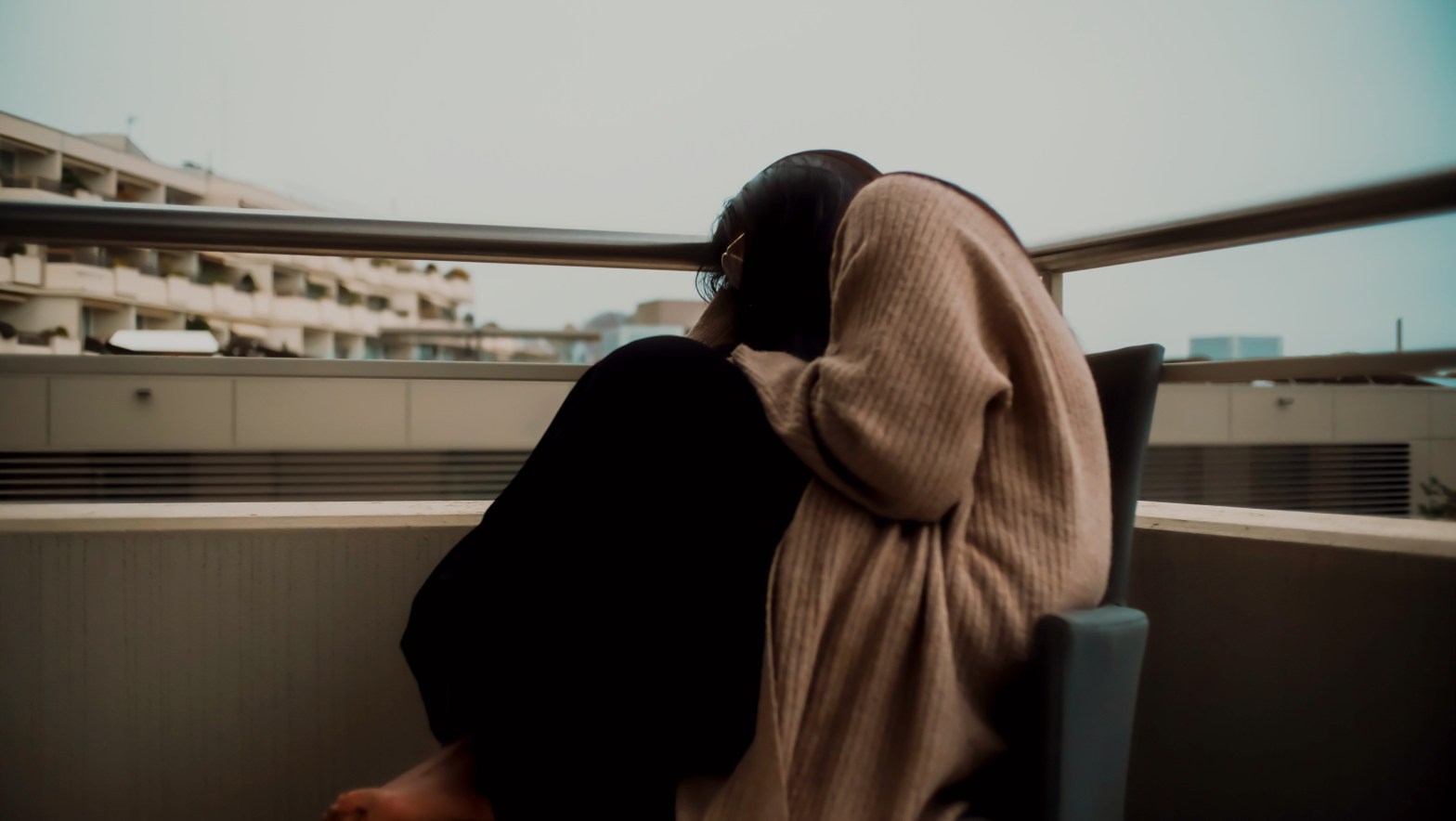
After the mastectomy, I had to learn.
Learn how to move with this new body.
Learn how to touch it.
How to look at it.
How to dress it.
How to understand what was still sensitive and what was no longer.
How to accept this chest that was mine without really looking like the one I had known for twenty-seven years.
I had to learn the scar.
The reconstruction.
The asymmetry.
The mirror.
Most of all, I had to learn to stop constantly searching for the old version of myself in my reflection.
It didn’t happen in a day.
There were moments when I looked at my body as something medical.
That was easier.
A mastectomy.
A reconstruction.
A postoperative scar.
Clean words.
Technical words.
Almost reassuring words.
Then there were the moments when I could no longer hide behind my profession.
I wasn’t a healthcare professional looking at a scar.
I was a twenty-seven-year-old woman looking at her own body.
And that was different.
But I tried.
That is probably what matters most.
I tried.
I didn’t necessarily like what I saw.
I hadn’t completely accepted it.
I didn’t wake up every morning telling myself that my scar made me a warrior.
I didn’t want to turn my chest into a symbol of courage just to make the situation more beautiful than it really was.
I simply wanted to learn how to live inside it.
So little by little, I tried to get used to it.
To this new shape.
This new skin.
This new version of me.
And behind all of that was an idea I desperately wanted to believe.
It was over.
They had removed the breast.
They had removed the cancer.
I had undergone the operation.
I had given what needed to be given.
All that was left was to recover.
To return to a normal life.
Or something that resembled one.
I didn’t think everything would become exactly as it had been before.
How could it?
My body already carried proof that something had happened.
So did I.
But perhaps, given enough time, cancer would become a story told in the past tense.
I had cancer.
Not:
I have cancer.
A tiny difference in a sentence.
An enormous difference in a life.
I wanted to reach that past tense.
I wanted the appointments to become less frequent.
I wanted my body to stop being watched like a potential threat.
I wanted every sensation to stop requiring an analysis.
I wanted doctors to become people I only saw occasionally again.
I wanted my calendar to contain things other than medical appointments.
I wanted ordinary problems back.
Ridiculous problems.
Problems that didn’t call your entire existence into question.
I wanted to be able to complain about a bad day without having to put it into perspective because I had had cancer.
I wanted to become something other than a patient again.
And for a few months, I tried.
I tried to take possession of my life again.
I tried to make peace with my body.
I tried to understand this reconstructed chest.
I tried to look at my scar a little longer.
I tried to convince myself that the operation had meant something.
That the price I had paid had been enough.
That the bargain was over.
Then October came.
Seven months.
That was about all cancer gave me before it came knocking on the same door again.
Seven months after my mastectomy.
On October 15, 2024, there was cancer again.
A recurrence.
I think there are some pieces of news that break you.
And then there are those that make you furious because you have already been broken once before.
The first time, I had cried my death.
This time,
I was angry.
An enormous anger.
Raw.
Almost animal.
Because I had already done it.
I had already done it.
I had already heard the diagnosis.
I had already waited for the results.
I had already been afraid.
I had already let doctors decide what needed to be removed from my body.
I had already given my breast.
I had already closed my eyes on an operating table without being sure I wanted to open them again.
And despite everything,
I had opened them.
I had looked at the bandages.
I had looked at the scar.
I had looked at this new body.
I had tried to get used to it.
I had tried to make peace with something I had never asked for.
And now you were telling me there was more?
What else do you want from me?
That was the question circling through my mind.
What else am I supposed to give?
You already took my breast.
You already changed my body.
You already took part of my femininity as I had known it.
You already took my peace of mind.
My relationship with the mirror.
My sense of safety.
My trust in my own body.
What is left to take?
Because at that moment, I no longer saw cancer simply as a disease that needed to be treated.
I almost saw it as something that had come back to finish what it had started.
And part of me thought:
Then do it.
This time, do it properly.
If you came back to take something else from me,
then take everything.
Just kill me.
Don’t leave me here to survive yet another version of myself.
I know how violent that sentence is.
It was already violent inside my head.
But that was where I was.
The first time, I had secretly hoped I wouldn’t wake up after the operation.
I woke up anyway.
So I tried.
I tried to get used to this body.
I tried to continue.
I tried to make something out of this life I hadn’t even been sure I wanted.
And seven months later, the cancer was back.
How was I supposed to react?
With courage?
With gratitude?
With a smile and another speech about fighting?
I didn’t want to.
I didn’t want to be courageous anymore.
I didn’t want to be strong.
I didn’t want to hear that I had already been through so much and that this proved I could get through this too.
Because sometimes, having survived before doesn’t give you more strength.
Sometimes, it simply makes you more exhausted by the thought of having to do it again.
And I,
I didn’t want to do it again.
I wanted to scream.
I already did this.
Don’t you understand?
I already did this.
I had paid.
Maybe that was what made me angriest of all.
I had believed there was some kind of logic to it.
A silent transaction.
My breast for my life.
Fine.
Even if I wasn’t sure I wanted that life, the bargain had been made for me.
They had operated.
I had survived.
So at the very least, let it have meant something.
But the recurrence destroyed even that illusion.
My breast was still gone.
My scar was still there.
My body was still different.
And the cancer,
the cancer had come back.
So what had any of it been for?
I know now that a mastectomy is not a promise.
That an operation is not a contract signed with a disease.
That medicine cannot always guarantee that something will never return.
But I wasn’t experiencing that recurrence through statistics.
I was experiencing it through my body.
And my body had already paid.
I would have to go back into the machinery I thought I had escaped.
Doctors.
Examinations.
Results.
Decisions.
Another operation.
On November 6, 2024, I would undergo a lumpectomy.
Once again, they would open my body.
Once again, remove something.
Once again, wait.
Except this time, something had changed.
The first time, I had mostly been lost.
This time, I was furious.
At cancer.
At my body.
At the injustice of something that hadn’t even waited for me to learn how to live with the first scar before coming back to give me another.
At reassuring words.
At the word lucky.
At the idea that I absolutely had to find something positive in all of this.
I didn’t want positivity.
I wanted my breast back.
I wanted March back.
I wanted to return to January, sitting in front of my television, place my fingers over that lump, and live again in that world where I didn’t know anything yet.
I wanted that girl back—the one who criticized her body without knowing how desperately she would one day wish she could have it exactly as it was.
But that girl no longer existed.
So I had to start again.
Not because I had found a reason to live.
Not because I had decided to fight.
Not because some light had suddenly appeared at the end of something.
I continued because the appointments kept coming.
Because the doctors kept organizing things.
Because the days continued to pass whether I wanted them to or not.
Just like after the first diagnosis.
Sometimes my medical file moved faster than I did.
Except this time, I knew what could be waiting behind those doors.
And I also knew something I would rather never have learned:
you can begin to get used to a catastrophe.
You can even begin rebuilding something on top of it.
And just when you finally manage to place one foot a little more firmly on the ground,
everything can begin again.
They had removed my breast.
I had tried to accept the body they had left me with.
I had tried to believe that cancer could become a sentence in the past tense.
I had cancer.
Seven months later, it had taken back the present.
And this time, I wasn’t asking what it was going to take from me anymore.
I didn’t have much left to bargain with.
I was simply angry that it hadn’t taken me with the rest.
Chapter 7 — They Told Me It Was Over