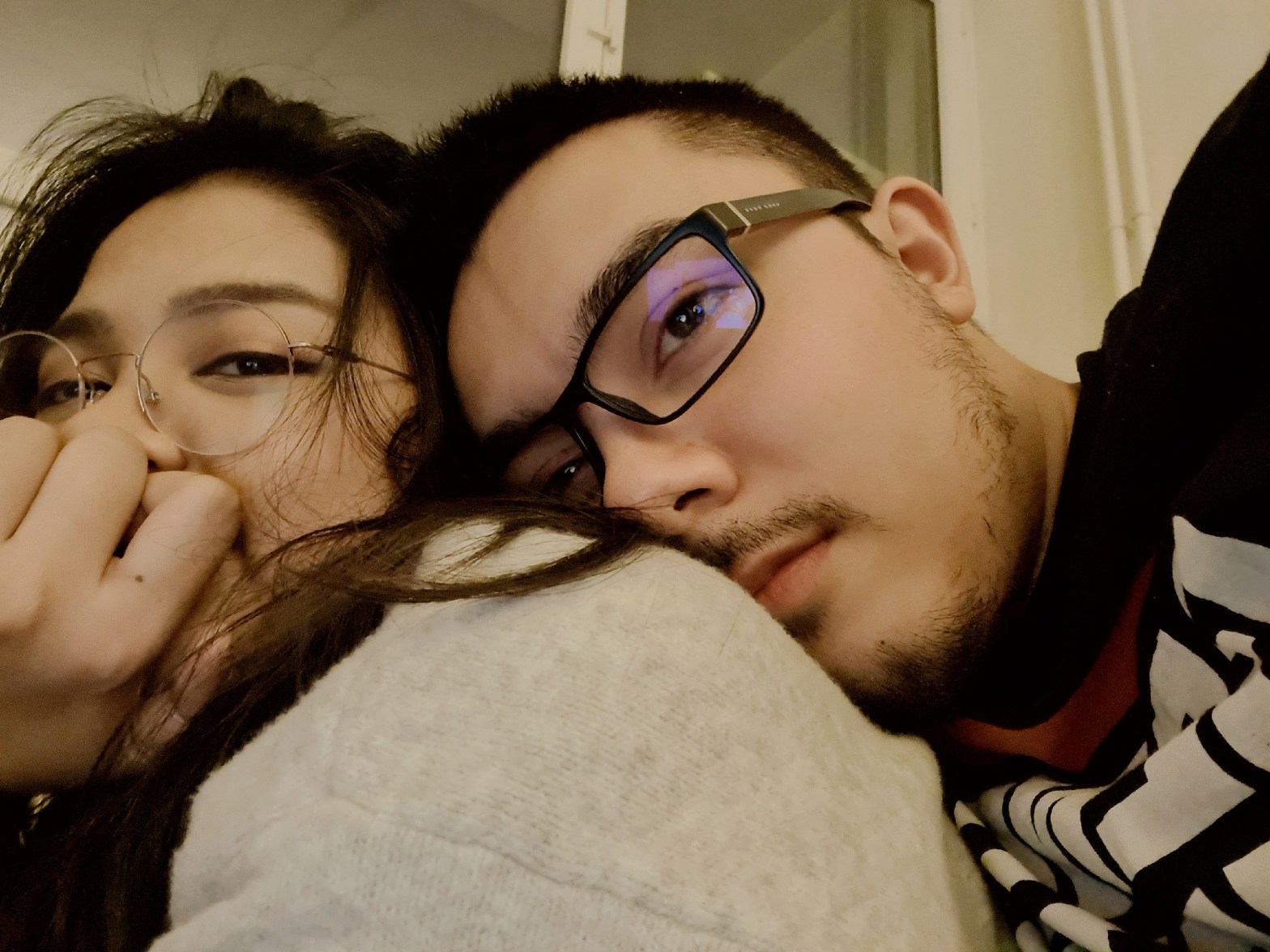
For a long time, I believed time was something we possessed.
Not something we could lose.
I had grown up. I had found my profession. And little by little, the big questions of adolescence had given way to the much more ordinary concerns of adult life.
Work.
Relationships.
Money.
Holidays.
Plans.
What we were going to eat that evening.
What we would do that weekend.
All those little things that seem insignificant while we are living them and that, in the end, make up almost an entire life.
There was Jean-Louis, too.
JL, as I will often call him throughout these pages.
His arrival in my life had not been welcomed enthusiastically by everyone.
My mother wasn’t happy about our relationship.
She had always played an important role in the decisions concerning my life, including those involving the people I could spend time with or allow into my world.
In a way, it was what I had always known.
There were the choices I made.
And the choices other people thought were better for me.
For a long time, I had tried to live with both.
I had followed the path toward medicine.
I had persevered through collège.
I had tried to become a nurse.
I had learned to listen, to respect, not to disappoint.
But as I grew older, something inside me began demanding more space.
The freedom to choose.
Even if I was wrong.
Even if people didn’t like my decisions.
Even if they weren’t the choices others would have made for me.
Then one day, I made a decision that would mark a real break from the life I had known until then.
I left my mother’s home.
And I went to live with Jean-Louis.
He welcomed me into his home.
At that moment, it wasn’t simply about moving in with my boyfriend.
For me, leaving also meant beginning to decide for myself what my life would look like.
It was exhilarating.
And probably frightening, too.
Because there is something strange about growing up trying to be the child everyone expected you to be: the day you finally gain the freedom to choose, you discover that you don’t always know what to do with it.
Jean-Louis was there throughout that transition.
When I doubted my professional future, he encouraged me to look for answers rather than remain stuck.
He was the one, in particular, who encouraged me to seek career advice at the Versoix town hall when I no longer knew which path to take.
That simple piece of advice would eventually lead me to my CFC as a healthcare assistant.
Then the months became years.
We built a life together.
Not a fairy tale.
A real relationship.
With routines, plans, arguments, reconciliations, shared meals, trips, difficulties, and those days so ordinary that you never think to remember them.
We grew up together.
Jean-Louis knew the young woman who was still trying to find her place.
Then the one who found her profession.
The one who was beginning to build her independence.
And I knew several versions of him, too.
Our relationship wasn’t perfect.
None are.
But it had become familiar.
Solid, I thought.
A presence so deeply woven into my life that I no longer really considered the possibility that one day, it might not be there.
I didn’t look at Jean-Louis and wonder how our story would end.
I looked ahead of us.
Because back then, whenever I imagined the future, I naturally imagined it in the plural.
Us.
What we would do.
Where we would go.
What we would build.
There were still so many things to decide.
But that didn’t matter.
We had time.
I had time.
That was probably one of the things I was most certain of.
I also had a body I didn’t think about very much.
And that feels strange to write now.
Because before our bodies become a problem, we often forget they are even there.
We complain about them, of course.
We want to lose a few pounds.
Change something.
Be prettier here.
Thinner there.
We look into a mirror and, with almost remarkable ease, find everything that could be improved.
I had my insecurities, too.
I didn’t always like my reflection.
I could criticize my body as though its only purpose was to match the image I wanted to see in the mirror.
But I trusted it.
Without even realizing that I trusted it.
I went to work assuming my legs would carry me.
I made plans assuming my body would follow.
I thought about the following year as though it were naturally promised to me.
I didn’t wake up in the morning checking whether something had changed.
I didn’t yet know what it was like to touch your own body with worry.
I didn’t know the fear of waiting for a result.
The fear of a check-up.
The fear of a doctor remaining silent for a few seconds too long.
Back then, a medical appointment was simply a medical appointment.
A hospital was mainly a place connected to my work, or somewhere other people were taken for care.
Illness still existed at a certain distance from me.
Of course I knew it existed.
I was a healthcare professional.
I had seen fragile bodies, people losing their independence, families waiting for news.
I had cared for patients during moments when their entire existence seemed suspended by a few test results, a few words, a few medical decisions.
Professionally, I knew that a life could change in an instant.
But knowing something and imagining that it could happen to you are two very different things.
The patients were the patients.
And I was on the other side.
I wore the uniform.
I walked into the room.
I asked how they were doing.
I cared for them.
Then I went home.
I went back to Jean-Louis.
I went back to our everyday life.
I went back to my own life.
An imperfect life, sometimes exhausting, sometimes complicated.
But a life I believed was solid.
I thought the big decisions would be mine to make.
Change jobs.
Travel.
Get married or not.
Have children or not.
Move somewhere else.
Start something over.
Wait a little longer.
I thought I could put certain things off until later.
Take better care of myself: later.
Take that trip: later.
Deal with certain problems: later.
Say certain things: later.
Enjoy life more: later.
We use that word so easily when we don’t yet understand its value.
Later.
As though somewhere there were an infinite supply of tomorrows that already belonged to us.
I wasn’t unhappy.
I wasn’t constantly happy, either.
I was simply living.
And perhaps that is exactly what makes that period of my life feel so remarkable when I look back at it now.
Its ordinariness.
Being able to have a problem that was just a problem.
Being able to be annoyed by a bad day at work.
Being able to argue with Jean-Louis over something ridiculous and consider it the drama of the day.
Being able to look at my body and criticize the way it looked instead of wondering what was happening inside it.
Being able to plan something six months ahead without mentally adding:
if everything goes well.
I didn’t know yet that some ordinary things were privileges.
I didn’t know that one day, a day ordinary enough for me to complain about would become something almost precious.
I thought I had time.
For Jean-Louis.
For us.
For my plans.
For my body.
To become the person I wanted to be.
To understand certain wounds.
To travel.
To change my mind.
To make mistakes.
To start over.
To live.
I thought I had time to decide what came next.
After all, I was still young.
Why would I have thought otherwise?
I didn’t know yet that a life could split in two without asking permission.
That there could be a before whose value we didn’t yet understand.
And an after we had never imagined.
Back then, there was no before.
No after.
There was Jean-Louis.
My work.
My plans.
My insecurities.
My little worries.
My ordinary days.
And that almost innocent certainty that tomorrow would simply follow today.
I thought I had time.
I didn’t know yet that sometimes, life decides before we do.
Chapter 3 — I Thought I Had Time